sustainMare Newsletter June 2025
Once again, we would like to draw your attention to the latest newsletter of the DAM research mission sustainMare. In addition to contributions from the joint projects iSeal, CONMAR, and SpaCeParti, MGF Baltic Sea and MGF North Sea also report on the completion of their projects in a dedicated article.
Learn more via the following link:
MGF-Final Conference: Reviewing six years of interdisciplinary marine research
(Source: Pascal Lüder, IOW)
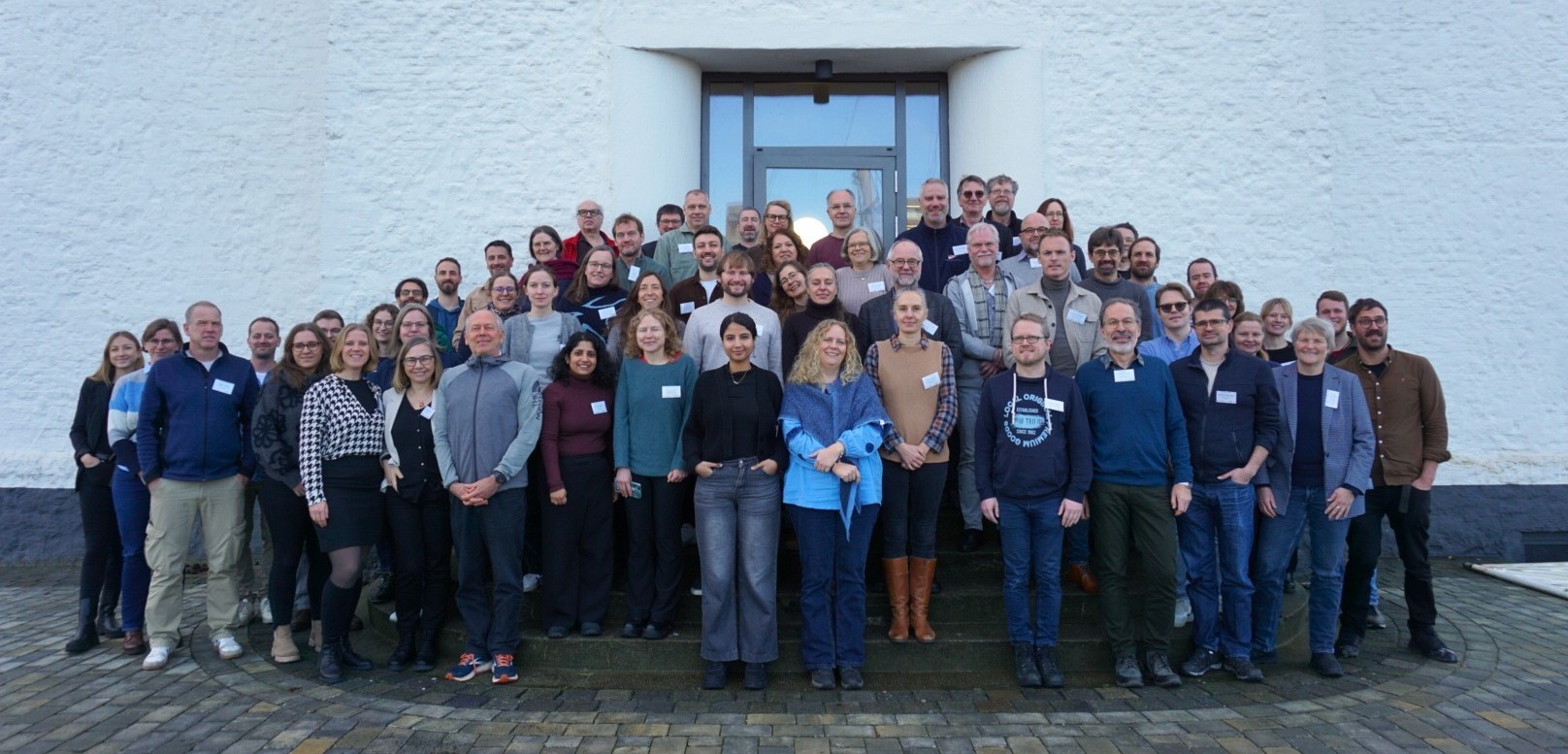
On January 14th and 15th, 2026, the final conference of the joint projects MGF-Nordsee and MGF-Ostsee took place at the Alfred-Wegener-Institute in Bremerhaven. In addition to the project members, the conference was attended by representatives of the Project Management Jülich (PtJ), the Federal Agency for Nature Conservation (BfN), as well as stakeholders from industry and NGOs. During the event, the central results and findings of the various project work packages were explained and discussed. These ranged from sedimentology and biogeochemistry to microbiology, meio- and macrofauna, as well as fish stocks. Furthermore, the results of the "trawling experiment" from July 2024 and the progress of the "Alternative Non-Invasive Monitoring Methods" working group were presented. Both conference days were characterized by lively discussions, interdisciplinary networking, and, above all, the linking of different research approaches. Participants acknowledged the progress already achieved and discussed open questions regarding the future implementation of protection through the exclusion of mobile bottom-contact fishing in German waters. It also became clear that, due to the delayed exclusion of bottom-contact fishing, it is not yet possible to conclusively determine how the marine protected areas will develop. However, the extensive and unique database will undoubtedly serve as an important reference for future investigations in these areas. On February 28th, 2026, the projects MGF-Baltic Sea, led by Prof. Klaus Jürgens (Leibniz Institute for Baltic Sea Research, Warnemünde), and MGF-North Sea, led by Dr. Sabine Horn (Alfred-Wegener-Institute, Sylt), will officially come to a close. We would like to express our sincere thanks to all participants for the many years of cooperation and the commitment that made this extensive project possible.
sustainMare Newsletter June 2025
The first Newsletter of the research mission sustinMare is live and MGF-Ostsee is in the Pole-Position!
MGF-Ostsee at DAM
On February 21 in Hamburg and March 25 in Berlin, the members and stakeholder forum of the German Marine Research Alliance (DAM) came togehter. Despite a packed agenda, the two sustainMaire projects—MGF-Ostsee (represented by Prof. Klaus Jürgens in Hamburg and Dr. Torben Bruhns in Berlin) and MGF-Nordsee (represented by Dr. Sabine Horn in Hamburg and Prof. Peter Schupp in Berlin)—had the opportunity to introduce themselves to these important bodies, present their findings to date, and outline future perspectives.
In this context, the continuation of the projects in a third phase was discussed. Due to the delayed exclusion of mobile bottom-contact fishing (MGF) in the North and Baltic Seas, the original mission goal—to investigate ecosystem development following MGF exclusion and to evaluate the impacts of MGF—has not yet been fully pursued. This means that we currently cannot assess how the areas will develop in the medium to long term after the exclusion of MGF.
The MGF presentations sparked lively discussions and intense exchanges. In alignment with the MGF consortia, the attending members and stakeholders also recognized the high relevance of these projects and recommended exploring options for their continuation.
A big thank you goes to the DAM team for their support and for giving us the opportunity to present our work!
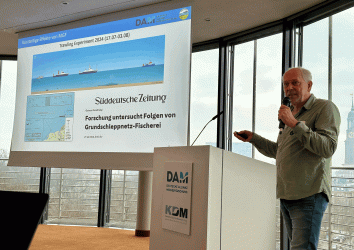
DAM general assembly ©Zielinski (IOW)
|
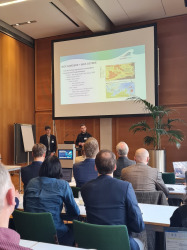
DAM stakeholder forum©P. Conrad (DAM)
|
Annual conference of sustainMare 2024 in Hamburg
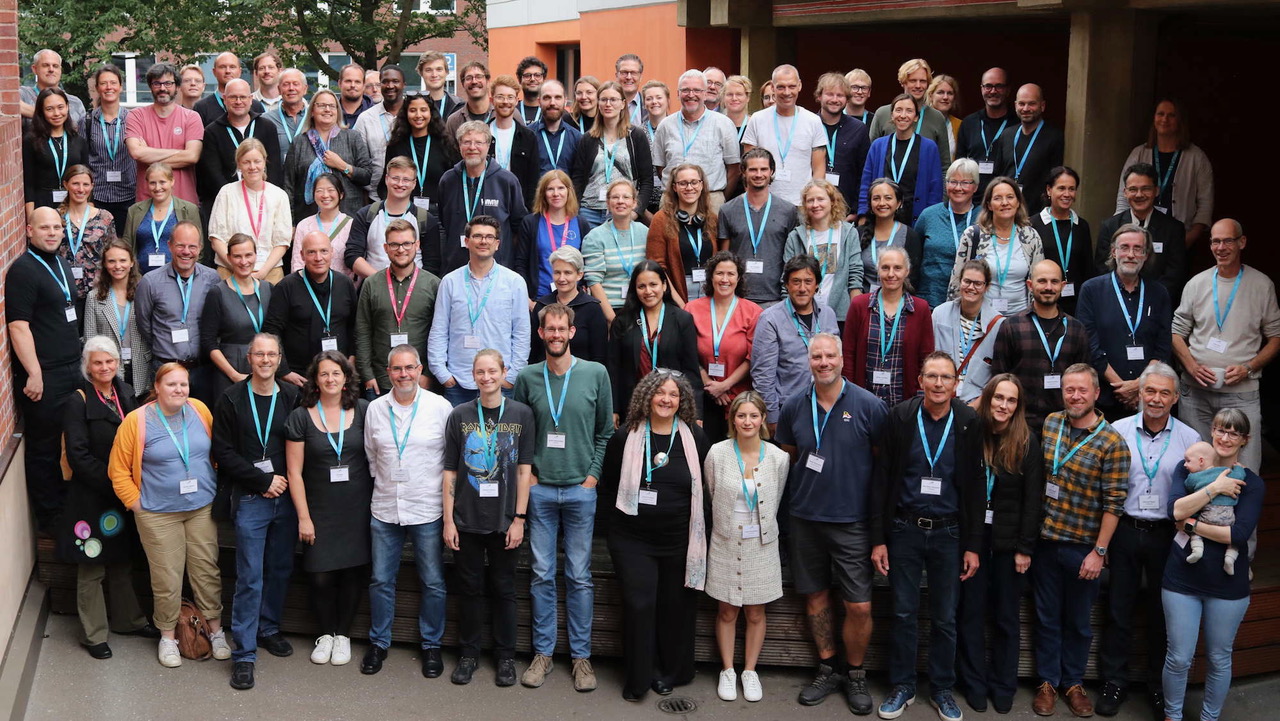
Within the framework of the DAM research mission sustainMare, more than 100 members of the involved research projects and institutions met on September 24 and 25 at the Catholic Academy Hamburg. The sub-projects presented their latest findings and provided an outlook on the second phase of the mission. In breakout groups, topic-specific concepts were developed, and a new mission working group was even founded, which will be an essential part of Phase II. Early career scientists were also given attention, as they had the opportunity to present their work during a poster session and participate in workshops prior to the conference.
Additional information on the conference (in German) and the DAM.
Non-Invasie Monitoring Methods for Baltic and North Sea
On November 12, colleagues from MGF-North Sea and MGF-Baltic Sea, as well as representatives from the Federal Agency for Nature Conservation (BfN), met at the University of Rostock to discuss future monitoring strategies in MGF exclusion zones. The exclusion of bottom trawling and dredging in marine protected areas has far-reaching implications for science, as these methods have often been used for research purposes.
To address these challenges, the MGF projects have early on incorporated non-invasive or minimally invasive methods, such as environmental DNA (eDNA) and video monitoring, alongside invasive methods. The goal of the meeting was to evaluate the potential and limitations of these methods and align them within the MGF projects to ensure comparable results between the efforts in the North Sea and the Baltic Sea.
The working group focuses on the marine protected areas of the North and Baltic Seas, which are part of the MGF projects and where fishing exclusion zones have been designated. In the future, it is planned to integrate this group as a subcommittee of the Mission Working Group “Monitoring & Assessment” within SustainMare, making it accessible to all participants of the mission
MGF-Ostesee among Top 10 in UN-Decade project competition
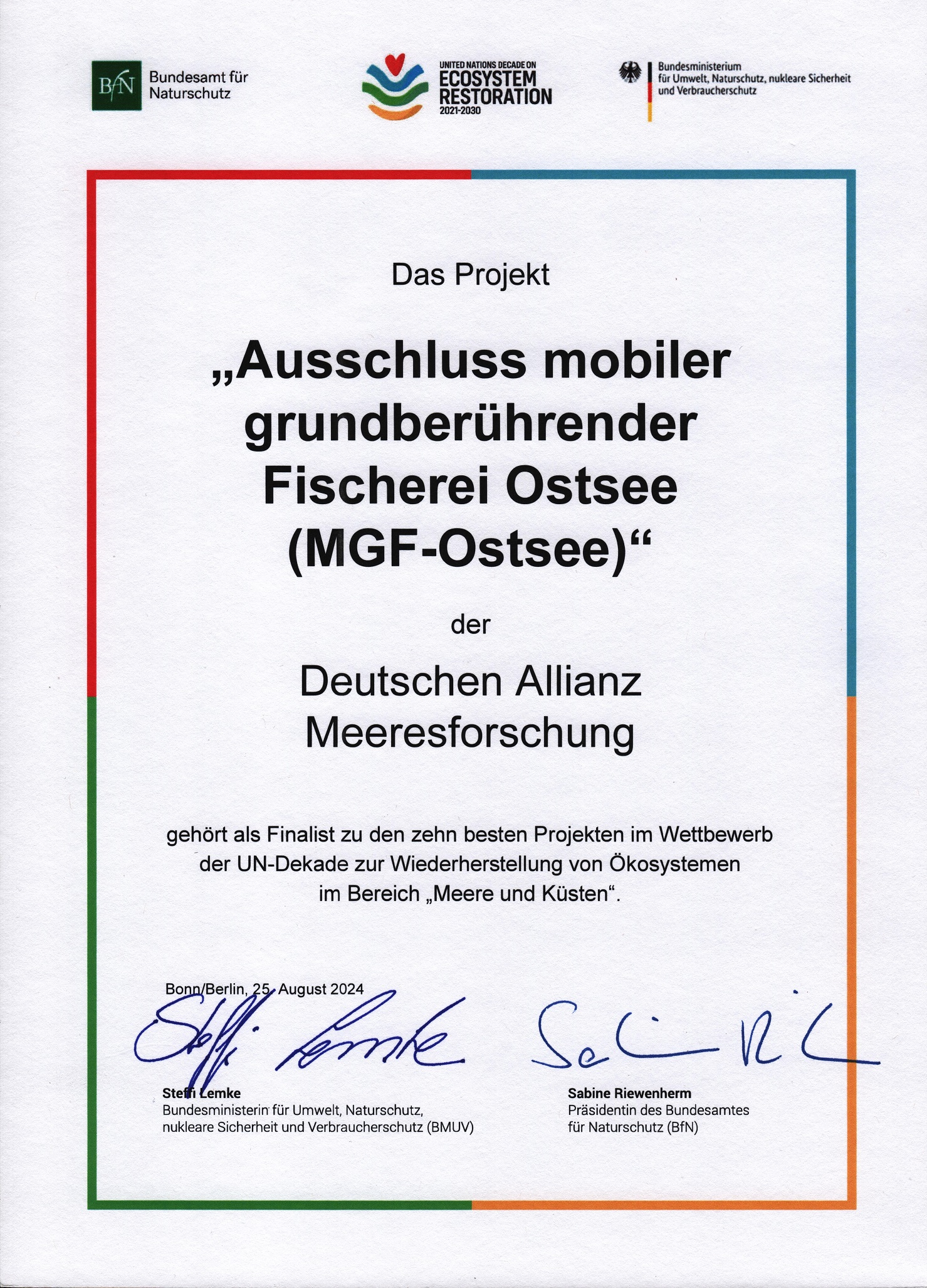
MGF-Ostsee II took part in the UN Decade for Ecosystem Restoration project competition in parallel with MGF-Nordsee II.
Alongside various other innovative and interesting projects, we were able to make it into the top 10, thus highlighting the importance of our work.
Further information can be found here (in German).
Effects of bottom trawling: IOW leads large Baltic Sea field experiment with four research vessels
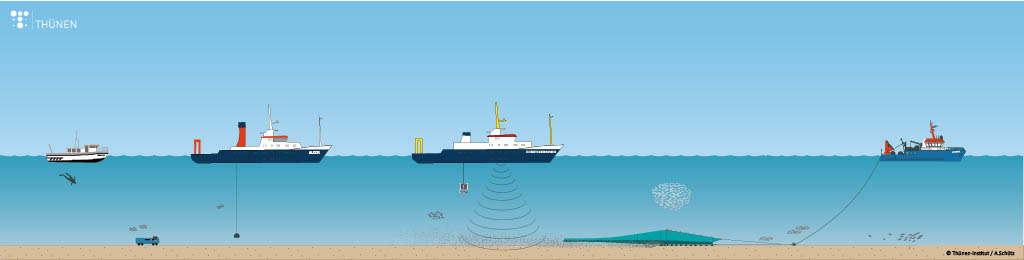
From July 16, 2024, a 19-day research cruise in the Baltic Sea area off Kühlungsborn was in progress. Under the direction of the IOW, a large-scale trawling experiment was carried out there, involving the research vessels Elisabeth Mann Borgese (IOW), Alkor (GEOMAR Kiel), Clupea (Thünen Institute of Baltic Sea Fisheries) and Limanda (University of Rostock). Together, a variety of samples were taken and processed in order to gain a detailed insight into the changes in and on the sediment after bottom trawling. Further information can be found here or in the press release (in German).
Cruise Report EMB345
EMB 342 Project Cruise
As part of the MGF-Baltic Sea II project, the RV Elisabeth Mann Borgese (EMB) was on a project cruise in the Baltic Sea in June 2024. The scientist gathered important data for the time series to documented the current state prior to the exclusion of bottom trawling fisheries in the marine protection areas.
MGF-Status Seminar 2024
On April 23rd and 24th, the involved scientists and stakeholders of the MGF projects (Baltic Sea & North Sea) met for the annual status meeting at the Institute for Baltic Sea Research Warnemünde (IOW).
The various working groups presented their results from the North and Baltic Seas and outlined their planned approaches for the upcoming project period.
In breakout groups, more detailed discussions took place, focusing on topics such as monitoring concepts, non-invasive sampling methods, and new modeling approaches.