
 |
IOW · NewsletterJuly / August 2026 |
|---|
| Newsletter online: EN | DE | ||
Topics |
||
|
News » Briese Award 2025 » 6th Baltic Earth conference » AI-based metadata extraction from sequence databases » People » New IOW director » New in the Scientific Advisory Board » New Projects » Project KOFI on fishing exclusion » Project BenthQual: Genetic benthos monitoring » Research Focus S2B » IOW research in the Great Barrier Reef » Expeditions » Research cruise to Namibia » Benthos monitoring expedition » Events » Warnemünde Evenings 2026 » IOW at MPA Day » For Early Career Scientists » Baltic Earth Summer School 2026 » Coastal Summer School 2026 » Public Relations » Girls’ Day & Long Night of Science » Citizen science project Warnow probe » IOW at the Baltic Sea Days » Publications » Fungi infect blue-green algae » Seaweed as deep sea carbon trap » Ship wake effects in the Baltic Sea » New study on Baltic Sea eutrophication » Predatory microalgae in the Amazon » Drones and AI for early warning of Vibrio bacteria » Call for Applications » Briese Award 2026 |
||
Baltic Sea research that builds connections |
||
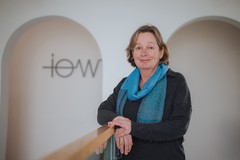
Marine research thrives on a spirit of discovery, perseverance, and an eye for the connections between life on the seafloor, the dynamics of water masses and matter cycles, and the question of how living organisms and human interventions shape marine ecosystems. This newsletter shows once again just how diverse our work at the IOW is: It focuses on new projects and methods for Baltic Sea research, the latest findings on biodiversity, matter cycles, and human impacts, as well as research that broadens our perspective on other coastal and marine regions. I am particularly pleased to see the many examples of how our work builds connections: between fundamental research and societal issues, between regional responsibility for the Baltic Sea and international cooperation, and between science and the public. This is evident in new citizen science activities and events in Warnemünde, in recent publications on pressing environmental issues, in international scientific exchange, and in the Briese Award, which recognizes outstanding early-career research in marine science. This newsletter provides insight into current developments, projects, people, and research results at the IOW. I hope you all enjoy reading it and that the articles demonstrate the scientific curiosity, methodological diversity, and shared responsibility for the oceans that are at the heart of our work. Warm regards, 
Heide Schulz-Vogt | Director |
||
News |
||
Briese Award 2025 for research on deep-sea mining |
||
|
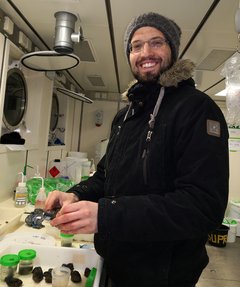
The Briese Award for Marine Research 2025, endowed by the shipping company Briese Schiffahrts GmbH & Co. KG and managed by the IOW, was presented on February 19, 2026, at the IOW to Dr. Iason-Zois Gazis of GEOMAR Helmholtz Center for Ocean Research Kiel. The jury recognized his outstanding dissertation on the high-resolution mapping of manganese nodules at a water depth of 4,500 meters and on the monitoring of sediment plumes during deep-sea mining. |
|
International research meeting: 6th Baltic Earth conference on Usedom island |
||
|
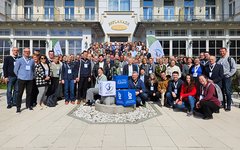
The 6th Baltic Earth Conference took place in Heringsdorf on Usedom island from April 13 to 17, 2026. The conference was aimed at the international research community of the Baltic Earth network, which addresses scientific issues relevant to sustainability and environmental protection in the Baltic Sea region. The conference was organized by the IOW, the Institute of Oceanology of the Polish Academy of Sciences (IOPAN), and the International Baltic Earth Secretariat (IBES). |
|
How can AI help make sequence databases more accessible? |
||
|
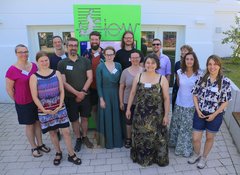
On June 25 and 26, 2026, the IOW hosted the first workshop of an NFDI4Biodiversity topic table on the subject of “AI Tools for Metadata Extraction in Sequence Databases.” Around 30 experts in research data management, science and business from 17 institutions in Germany and beyond came together to discuss how metadata in sequence data archives can be made more readily searchable, comparable, and easier to use for specific research questions through the use of artificial intelligence (AI). The network activity (AIMS for short) is funded for one year by the German Research Foundation (DFG). |
|
People |
||
Change at IOW's helm: Heide Schulz-Vogt becomes new director |
||
|
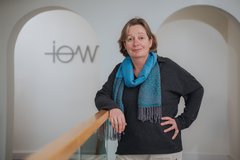
On January 1, 2026, Heide Schulz-Vogt took over as scientific director of the IOW. The internationally renowned marine scientist has been closely associated with the institute for many years, most recently as the deputy director. She succeeds Oliver Zielinski, who joined the Helmholtz Centre Hereon as scientific director. Schulz-Vogt is leading the IOW as interim director until a new director is recruited through a regular appointment process. |
|
New in IOW’s Scientific Advisory Board: Elda Miramontes |
||
|
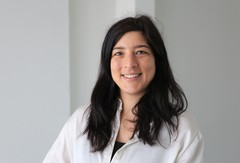
Prof. Dr. Elda Miramontes, an expert in marine geosciences at MARUM, the Center for Marine Environmental Sciences at the University of Bremen, joined IOW’s Scientific Advisory Board on January 1, 2026. |
|
New Projects |
||
Will fishing bans make a difference on the Baltic seabed?
|
||
|
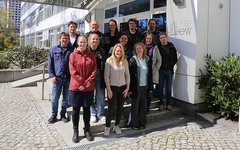
On April 21, 2026, the researchers involved in KOFI met for the first time at the IOW to launch the project. KOFI aims at investigating the development of biodiversity of marine benthic life and carbon storage in marine sediments following the mobile bottom-trawling ban in the Fehmarn Belt Natura 2000 site. Duration: November 1, 2025 – March 31, 2030 • Project lead (IOW): Klaus Jürgens • Funding: German Federal Agency for Nature Conservation (BfN) |
|
New approaches to benthos monitoring in the Baltic Sea:
|
||
|
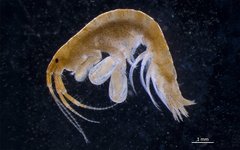
On March 10, 2026, the IOW project BenthQual started its active research phase with the first sampling. Its goal is to genetically catalogue all known macrozoobenthic organisms of the Baltic Sea and to advance molecular biological monitoring methods for this animal group. Duration: December 1, 2025 – November 30, 2030 • Project lead (IOW): Michael Zettler • Funding: German Federal Agency for Nature Conservation (BfN) |
|
Research Focus S2B |
||
IOW investigates the physiology of Australian corals |
||
|
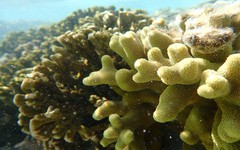
The interdisciplinary Shore To Basin (S2B) coastal research project allows the IOW to engage not only in its core research area of the Baltic Sea but also in international fundamental research projects – including field studies on the physiology of corals of Heron Island, a small island in Australia’s Great Barrier Reef. |
|
Expeditions |
||
Research expedition to Namibia's Benguela upwelling zone |
||
|
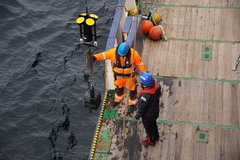
On February 12, 2026, the research vessel “Meteor” began its M217 expedition from Las Palmas (Gran Canaria, Spain). On board: a 26-member interdisciplinary team of researchers from the IOW, the GEOMAR Helmholtz Center for Ocean Research Kiel, and the University of Hamburg. The IOW scientists who accompanied the expedition were responsible for deploying moored CTD measuring systems. |
|
Research expedition for benthic monitoring in the Baltic Sea launched |
||
|
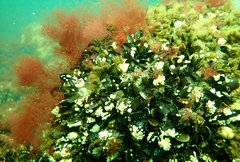
On July 4, 2026, the research vessel “Elisabeth Mann Borgese” left Rostock to embark on expedition EMB398. During the 11-day research cruise, the IOW team collected samples for an inventory of benthic organisms, for environmental DNA analyses, and for further molecular biological studies. |
|
Events |
||
| ? July / August 2026 | ||
Warnemünde Evenings – Baltic Sea research for everyone |
||
|
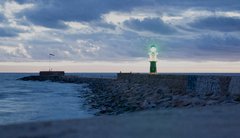
IOW’s German language summer lecture series, the Warnemünde Evenings, is taking place again this year. From July 9 to August 27, researchers from the IOW and partner institutions invite the general public to learn more about the latest Baltic Sea research. |
|
| ? August 1, 2026 | 2:00 p.m. – 5:00 p.m. | 6:00 p.m. – 8:15 p.m. | ||
International day of marine protected areas: The IOW joins in |
||
|
To mark International Marine Protected Areas Day – also known as MPA Day – the Federal Agency for Nature Conservation (BfN) is organising a wide variety of activities at various locations along the Baltic Sea to raise awareness about marine protected areas and explain why they are urgently needed. The IOW is celebrating MPA Day with a lively hands-on event at Warnemünde Beach, where visitors of all ages can learn about various sampling methods, explore the often unknown life in the shore zone, and talk with IOW experts. At the same time, IOW’s permanent exhibition will be open. Under the motto “Knowledge creates protection – Dive into the offshore marine protected areas of the Baltic Sea”, the BfN is also organizing an evening event at the IOW featuring a lecture and themed stations. |
||
For Early Career Scientists |
||
| ? August 17 – 24, 2026 | ||
12th Baltic Earth Summer School “Climate of the Baltic Sea region” |
||
|
The international summer school is aimed at master's students in marine sciences and related subjects and takes place on the island of Askö in Sweden. |
||
| ? September 12 – 22, 2026 | ||
Coastal Summer School 2026 “Environmental monitoring – A powerful tool for sustainable management of our seas” |
||
|
The IOW organises the international summer school for master’s students, PhD students and postdocs on the island of Hiddensee in collaboration with the Helmholtz Centres Hereon and the Alfred Wegener Institute for Polar and Marine Research. |
||
Public Relations |
||
Girls’ Day and the Long Night of Science:
|
||
|
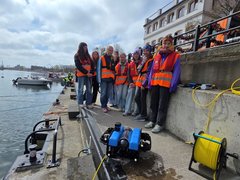
On April 23, 2026, everything at the IOW revolved around the fascination with science: While 14 schoolgirls experienced marine research first-hand during Girls’ Day at the IOW, the institute presented itself to a wide audience that same evening at Rostock’s Long Night of Science on the University of Rostock’s Südstadt campus. |
|
The citizen science project “Warnow Probe” kicks off |
||
|
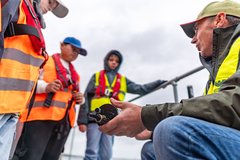
On May 20, 2026, a citizen science project for environmental monitoring in the Lower Warnow was officially launched with the handover of the first Warnow probe to a group of pupils from the Rostock-based Borwinschule. |
|
The IOW took part in the state-wide MV Baltic Sea Days |
||
|
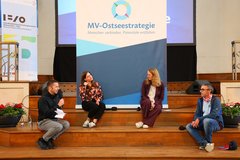
From June 10 to 19, 2026, the MV Baltic Sea Days took place for the first time under the motto ‘Broadening Horizons’. Initiated by the Ministry of Science, Culture, Federal and European Affairs of Mecklenburg-Western Pomerania, the event brought together institutions and organisations from the fields of science, business, culture and society to present projects and ideas that have emerged from wide-ranging cooperation in the Baltic Sea region. The IOW also joined in: At the opening event in Greifswald, the institute presented the Plasticschool learning module for school classes in the “Marine conservation and sustainability” pavilion, and during the public dialogue in Greifswald Cathedral with MV Minister for European Affairs, Bettina Martin, Sven Hille from IOW’s Science Management represented the topic Baltic Sea research on the panel. Furthermore, for the whole period of the MV Baltic Sea Days, IOW’s exhibition opened its doors every day for the general public. In collaboration with EUCC – Die Küsten Union Deutschland the permanent exhibits were complemented by impressive videos about people, whose lives are shaped by the sustainable management of the sea, and an introduction of the SeaStore project, which focuses on the protection and restoration of seagrass beds. |
|
Publications |
||
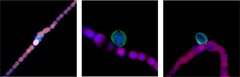
Fungi infect nitrogen-fixing blue-green algae |
||
|
Under the lead of the IOW, the influence of parasitic fungi on the physiology and survival of blue-green algae (cyanobacteria) in the Baltic Sea was investigated. The loss of nitrogen and carbon resources from the host cells as a result of such infections could directly affect their viability and, in consequence, the future occurrence of blue-green algae blooms, the study found. Reference:
Feuring, A., Lawrence, C. D., Salcedo, J., Whitehouse, M. J., Vogts, A., Zoccarato, L., Klawonn, I. (2026). Fungal parasites infecting N2-fixing cyanobacteria reshape carbon and N2 fixation and trophic transfer. Nature Communications, https://doi.org/10.1038/s41467-025-67818-x
Scientific contact: Isabell Klawonn
|
|
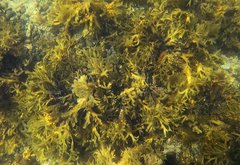
Greenland seaweed has great potential as an efficient deep-sea carbon sink |
||
|
Greenland’s coastal macroalgal forests may be a far more significant contributor to global carbon storage than previously thought. That is the outcome of a study co-led by the IOW and the Helmholtz-Zentrum Hereon. The international research team demonstrated, how ocean currents and intense mixing events act to push seaweeds – and thus the carbon in their tissues – into the deep ocean. Reference:
Daniel F. Carlson, Nobuhiro Suzuki, Ruben Carrasco, Karen Filbee-Dexter, Laura C. Gillard, Paul G. Myers, Ana M. Queir´os, Jorge Assis, Carlos M. Duarte, Mikael Sejr, Dorte Krause-Jensen (2026): Ocean transport and vertical mixing connect Greenland’s macroalgae to deep ocean carbon sinks. Science of the Total Environment 1012, 181247, https://doi.org/10.1016/j.scitotenv.2025.181247
Scientific contact: Daniel Carlson
|
|
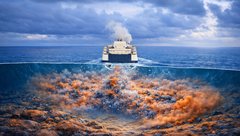
Ship wakes cause more turbulence in the Baltic Sea than previously thought |
||
|
Commercial shipping affects the Baltic Sea not only at the surface, but also has a significant impact on the water column and the seabed. A study by the IOW and Kiel University has now shown for the first time that wake turbulence caused by large ships in heavily trafficked areas of the western Baltic Sea significantly alters water stratification and leads to marked sea floor erosion. Reference:
Jacob Geersen, Peter Feldens, Luisa Rollwage, Lenya Baumann, Knut Krämer, Patrick Westfeld, Sebastian Krastel, Soeren Ahmerkamp, Franz Tauber, Jens Schneider von Deimling (2026): Ship wake induced water column mixing and meter-scale seabed erosion in the Baltic Sea. Nature Communications, https://doi.org/10.1038/s41467-026-68875-6
Scientific contact: Jacob Geersen, Jens Schneider von Deimling
|
|
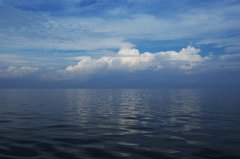
Why the eutrophicated Baltic Sea struggles with recovery – New IOW review highlights key processes and causes |
||
|
Although phosphorus and nitrogen river loads, the main cause for eutrophication in the Baltic Sea, have been significantly reduced, adverse effects such as algal blooms and oxygen depletion still massively occur. Scientists at the IOW have published a comprehensive review showing how nutrient pollution, internal matter cycles and global warming interact, thereby delaying the impact of protective measures. The authors also identify potential approaches for effective Baltic Sea management. Reference:
Joachim Kuss, Peter Holtermann, Lars Umlauf, Olaf Dellwig, Ralf D. Prien, & Joanna J. Waniek (2026). The Changing Baltic Sea: Between Nutrient Load Reduction and a Warming Climate. Annu. Rev. Mar. Sci. 2026. 18:16.1–16.26, https://doi.org/10.1146/annurev-marine-040324-020707
Scientific contact: Joachim Kuss
|
|
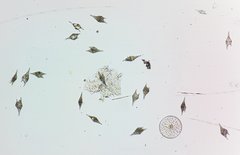
Amazon river plume: Where microalgae go carnivorous to win |
||
|
In the Amazon river plume, microscopic algae adopt a surprisingly flexible survival strategy: They combine photosynthesis with the uptake of organic matter. An international research team led by the IOW has shown that this so-called mixotrophy becomes the dominant and most successful lifestyle in mature plume waters. Reference:
Ana Fernández-Carrera, Noémie Choisnard, Dirk Wodarg, Iris Liskow, Ajit Subramaniam, Joseph P. Montoya, Maren Voss, Natalie Loick-Wilde (2026). Mixotrophy emerges as an optimal strategy in mature waters of the Amazon River plume. Communications Biology, https://doi.org/10.1038/s42003-026-09893-4
Scientific contact: Ana Fernández-Carrera, Natalie Loick-Wilde
|
|
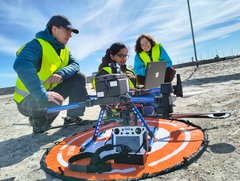
IOW research uses drones and AI to improve local early warning systems for Vibrio bacteria |
||
|
The presence of the potentially dangerous human pathogen Vibrio vulnificus in the Baltic Sea can now be predicted up to five weeks in advance using artificial intelligence (AI). A research team led by the IOW reached this conclusion by combining high-resolution environmental, satellite, and microbiome data in an AI-based analysis. Furthermore, the IOW is testing an AI-supported drone measurement program for local Vibrio warning systems. Reference:
Conor Christopher Glackin, David Riedinger, Erik Zschaubitz, Lukas Vogel, Theodor Sperlea, Heike Benterbusch, Clara Nietz, Matthias Labrenz (2026): AI-driven forecasting of Vibrio vulnificus in the Southern Baltic Sea using high-resolution data. Water Research 297, 125647, https://doi.org/10.1016/j.watres.2026.125647
Scientific contact: Daniel Herlemann, Matthias Labrenz
|
|
Call for Applications |
||
Briese Award for Marine Research 2026 |
||
|
Together with the IOW, the shipping company Briese Schiffahrts GmbH & Co. KG presents the annual “Briese Award for Marine Research”. Since 2010, this award has recognised outstanding doctoral theses with findings closely linked to the use of research vessels, the use and development of marine technology and / or data collection at sea. For the first time, the prize money, which is donated by the Briese shipping company, has doubled from 5,000 euros to 10,000 euros. Applications for the Briese Award 2026 can be submitted until October 30, 2026. |
||
| Jobs | Data Protection | Legal Notice | Contact | ||
|
If you would like to receive our newsletter regularly from now on you can register here. If you no longer wish to receive our newsletter you can unsubscribe here |
||