
Working Group
Organic Trace Substances
We are interested in the behavior of organic trace substances of anthropogenic and natural origin in the marine environment with focus on the Baltic Sea. Via sampling at sea and detailed analysis in the laboratory, we aim to answer complex questions such as the fate of pollutants or the compositional variability or dissolved and particulate organic matter in nearshore systems or the open ocean. Often, this research is linked to developing and adapting analytical techniques.
In the frame of the Environmental Monitoring of the IOW a range of organic contaminants in the Baltic Sea are analysed annually which allow to pursue long term data series and to observe long term trends in the field of organic pollutants.
The work of the research group is assigned to the research areas "Coastal Seas in Transition" (RA 2) and "Emerging Technologies Enabling Advanced Marine Science" (RA 3) of the IOW research program.
In the focus of our research are specific environmentally relevant compounds, such as
- Persistent contaminants, e.g. polychlorinated biphenyls and polycyclic aromatic hydrocarbons
- Pesticides, e.g. glyphosate
- Compounds from the group of pharmaceuticals and personal care products
- Endocrine active compounds, e.g. estrogens
- Natural organic P comounds, e.g. methyl phosphonic acid
The complex mixture that is natural organic matter, particulate or dissolved, forms the base of all food webs in aquatic systems and its turnover is intricately linked to the global carbon cycle, and constantly affected by anthropogenic impact. Via bulk quantification and analysis of composition via optical and ultrahigh resolution mass spectrometric approaches, we aim to shed light on the
- Fate of terrestrial organic matter in the ocean
- Short-term variability in high-energy nearshore systems
- Global oceanic distribution pattern and underlying processes
- Anthropogenic impacts on natural biogeochemical cycles
- links in pollutant and natural organic matter cycles
Working group lead:
Team:
Technician
Technician
Technician
Technician
PostDoc
PhD Student
PhD Student
Guest
Emeritus:
Prof. em. Dr. Detlef Schulz-Bull
Availabe Instrumentation
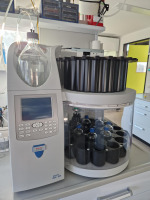
Accelerated solvent extraction systems for extraction of pollutants from sediment and filter samples.
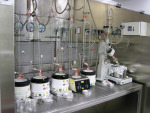
Soxhlet extractors for recovery of pollutants extracted from water onto columns.
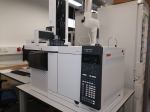
Gas chromatography - Triple quad mass spectrometer (GC-MS/MS), currently used for accredited quantification of PAHs and PCB.
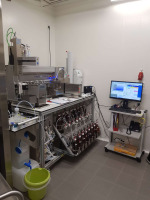
Automated extraction of pollutants from water samples (Foto: L. Vogel/IOW).
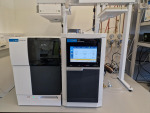
Intuvo GC-MS, currently used for PAH and PCB analysis and various tests.
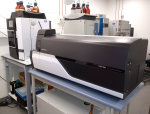
Liquid chromatography - Triple mass spectrometer (LC-MSMS), currently used for quantification of pharmaceuticals, UV filters, and personal care products.
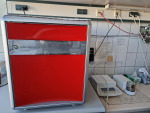
Total carbon and nitrogen analyzer Vario Microcube elemental analyzer for filter, sediment, and other solid samples.
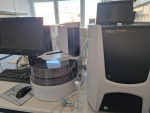
Shimadzu TOC-L dissolved organic carbon and total nitrogen analyzer for water samples.
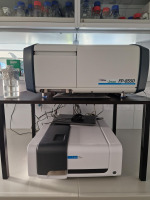
Spectrophotometer (Agilent Cary 60) and spectrofluorometer (JASCO FP8550) for optical analysis of dissolved organic matter composition.
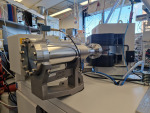
GC-IRMS for compound-specific analysis of carbon and nitrogen isotopes, mainly from amino acids (Contact: N. Loick-Wilde).
News from the Working Group
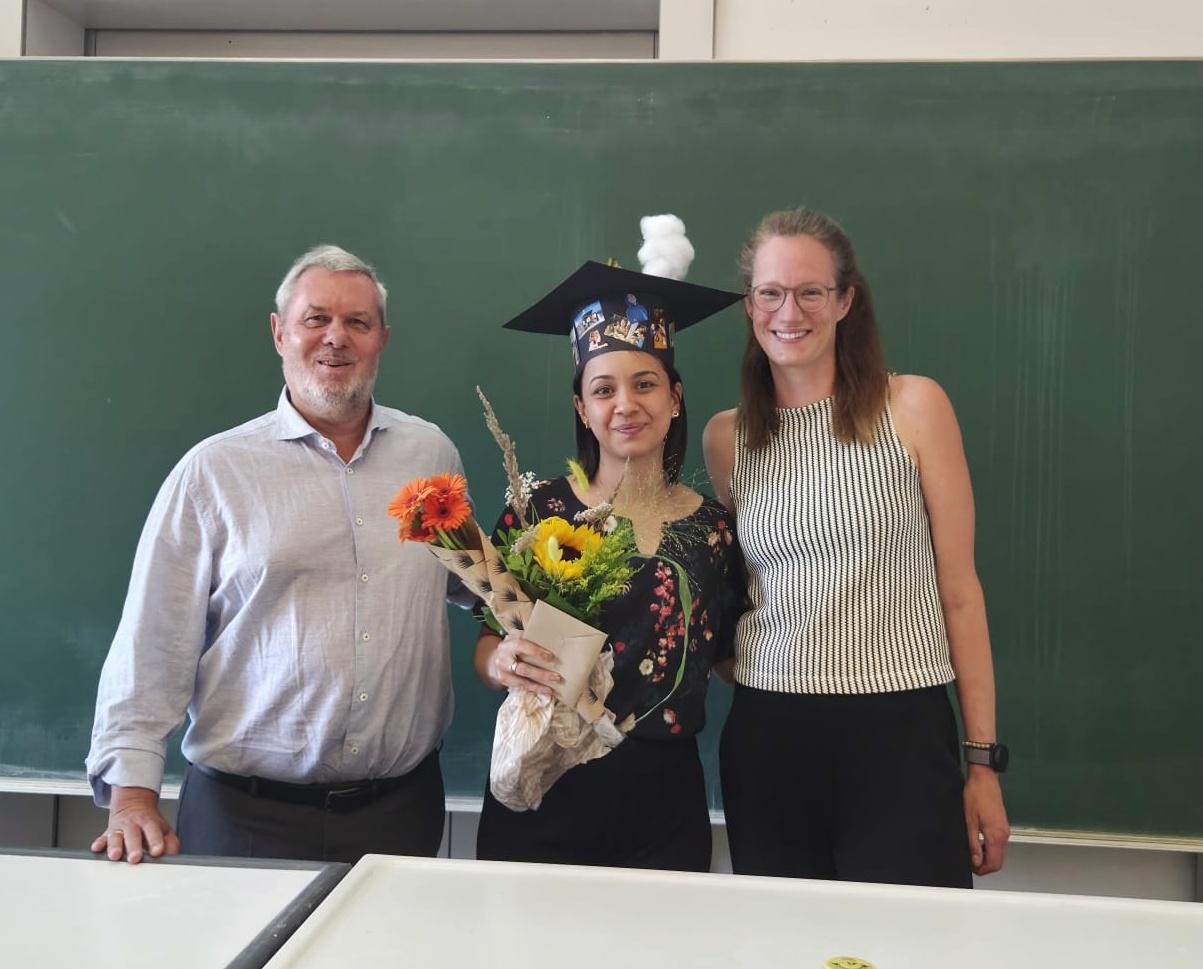
Tassiana successfully defends her dissertation [14.07.2026]
On July 14, Tassiana successfully defended her dissertation, titled "Distribution and Fate of Thermogenic Organic Compounds in the Marine Environment." In her work, she compared various analytical methods for black carbon, examining samples from the Baltic Sea, a sediment core from the Congo input region, and the Indian Ocean, to better determine sources, transport pathways and persistence of these compounds.
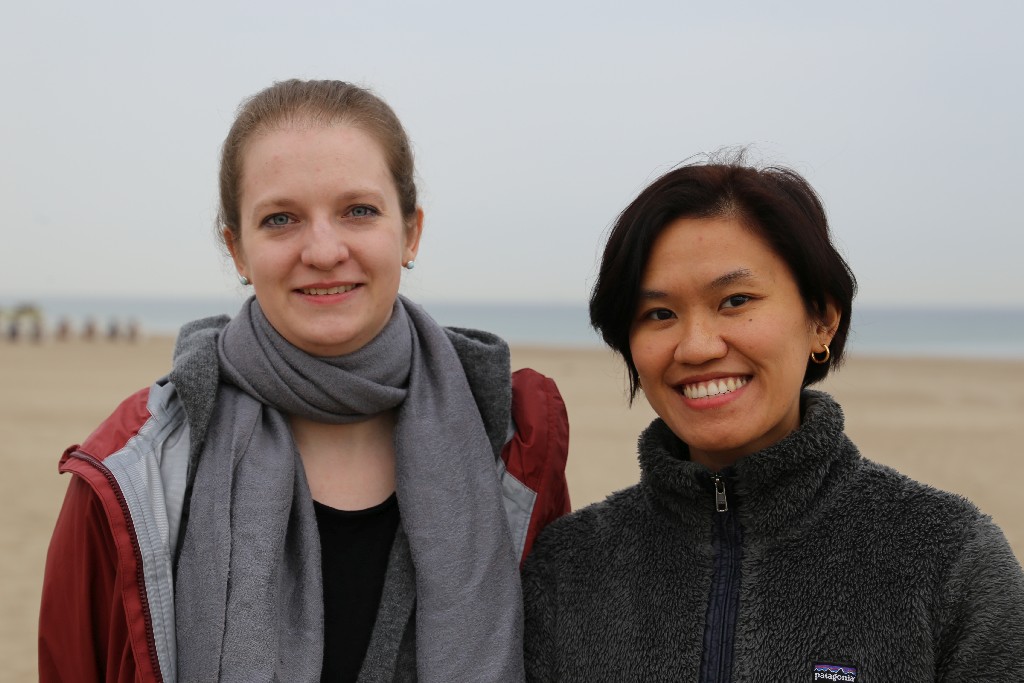
Welcome to Linn and Mellinda! [26.05.2026]
In April we welcomed Linn Speidel and Mellinda Aimee Jajalla as new members to our group Organic Trace Substances. In her PhD theses Mellinda will investigate the occurrence and distribution of methyl-phosphonate and its contribution to the oxic production of methane in the Baltic Sea as part of the MPn Baltic Sea project. Linn joined the KOFI project as a Postdoc and will investigate the carbon sequestration in marine sediments after exclusion of bottom trawling fisheries.
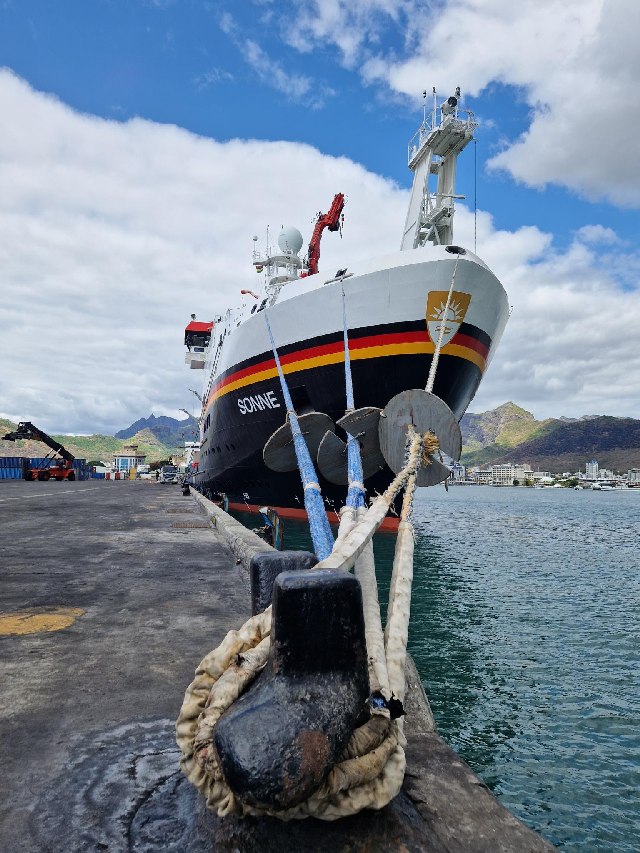
New publication: Thermogenic Organic Matter in the Indian Ocean [28.04.2026]
Our research on “Differential Drivers of Thermogenic and Bulk Dissolved Organic Matter in the Indian Ocean” was just published in the journal Global Biogeochemical Cycles. This work is the last piece of Tassiana’s doctoral thesis and describes the distribution of thermogenic carbon assessed via PAH (polycyclic aromatic hydrocarbons), DBC (dissolved black carbon) and on molecular formula level via FT-ICR-MS in the Indian Ocean. Data were collected during the EPOLIO cruise SO305-2, led by Prof. J. Waniek, in summer 2024. The publication can be openly accessed here: https://doi.org/10.1029/2025GB008975.
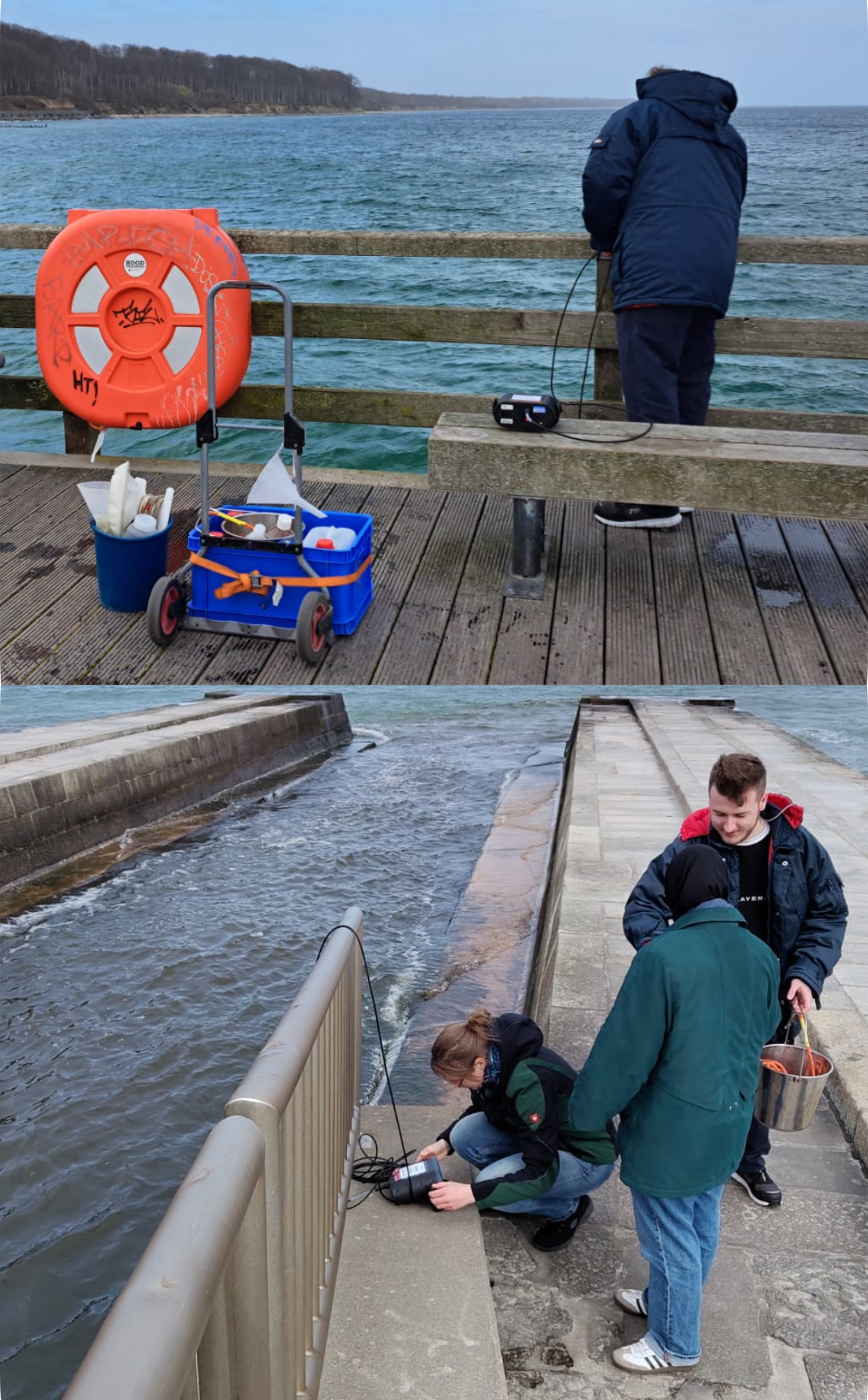
Start pollutants analysis at Heiligendamm pier and mouth of Mühlenfliess river [31.03.2026]
Within the IOW long-term analysis at the Baltic Sea coast site Heiligendamm pier we have started to regularly take water samples for the analysis of pollutants from the group of emerging concern. We are also including samples from the site where the small river Mühlenfliess discharges into the Baltic Sea.
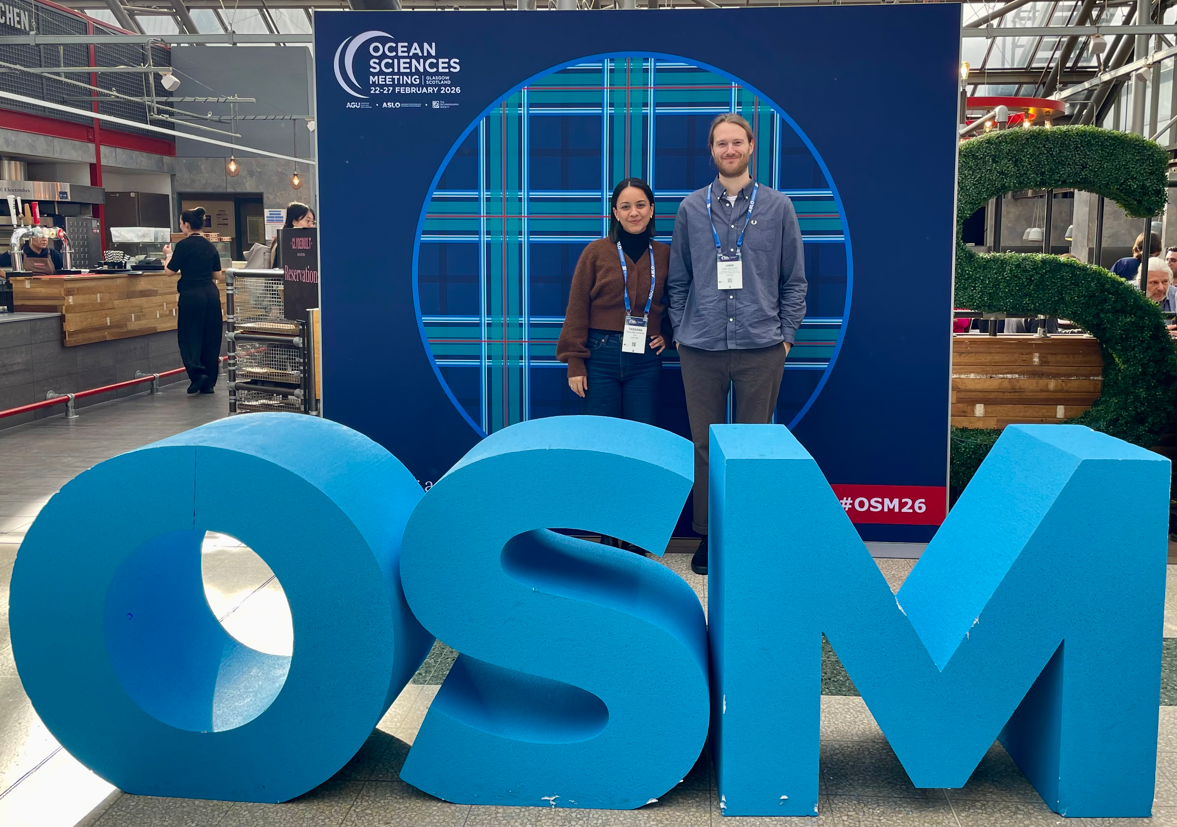
Ocean Science Meeting Glasgow [08.03.2026]
Tassiana Serafim and Jann Müller, our PhD candidates, participated in the Ocean Sciences Meeting 2026 in Glasgow. Tassiana presented her work on thermogenic dissolved organic matter in the Indian Ocean, combining polycyclic aromatic hydrocarbons, dissolved black carbon, and molecular dissolved organic matter data. One of the main take-home messages was that these thermogenic tracers show contrasting patterns, indicating different controls on their distribution and persistence in the ocean. Jann presented the first results of an experiment investigating the role of dissolved organic matter composition in the photodegradation of contaminants of emerging concern. Among other findings, the intricate relationship between direct and indirect effects of composition suggests compound-specific dynamics in contaminant photodegradation, with only limited matrix-specific implications. The conference presentations sparked valuable interdisciplinary discussions, with an excellent opportunity to exchange ideas with the community.
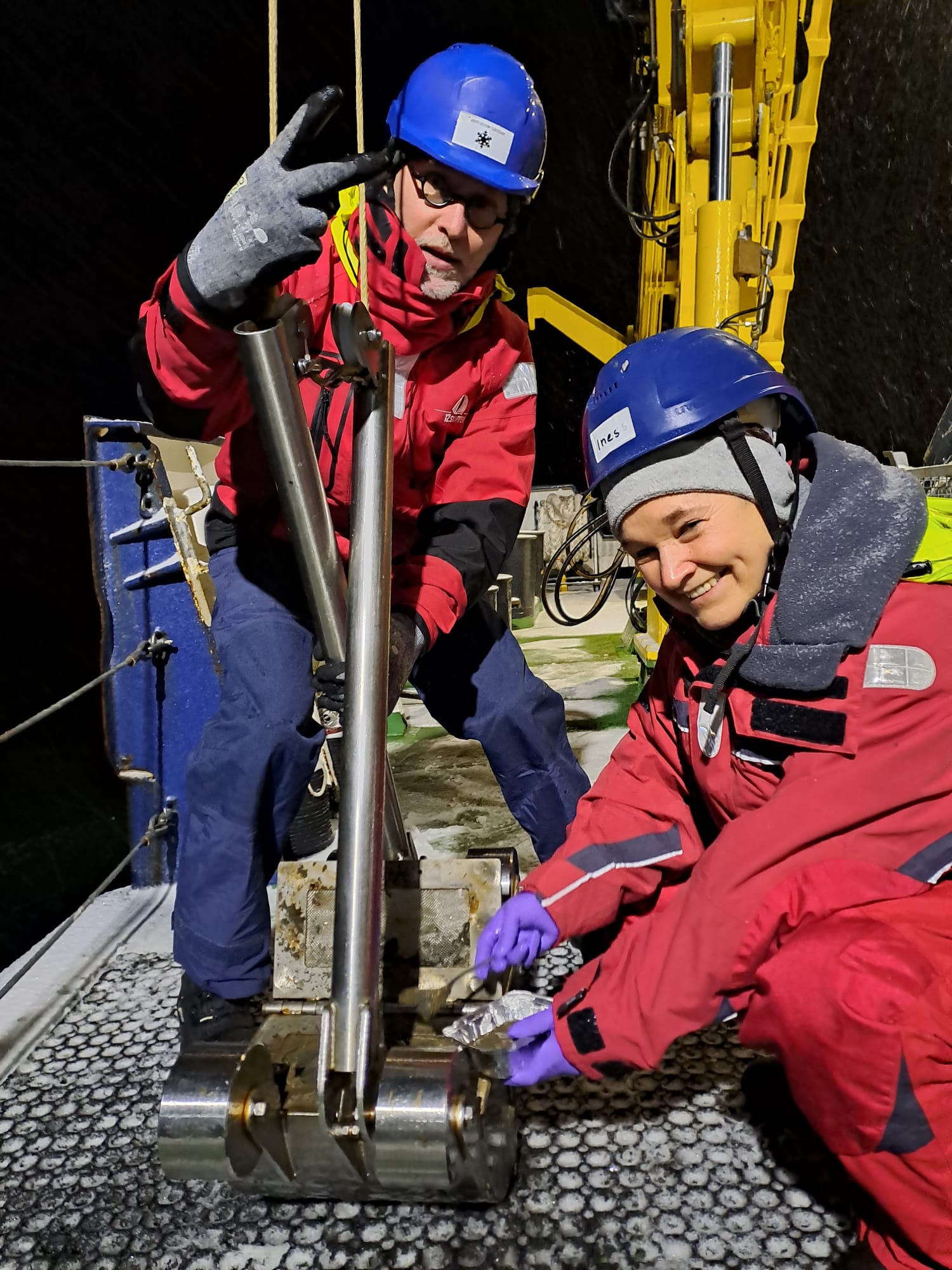
Sampling at Sea [06.02.2026]
Ines Hand is currently busy on board FS Elisabeth Mann Borgese, taking samples during cruise EMB387 as part of the Baltic Sea monitoring program. Despite the freezing cold, surface sediments are being collected for pollutant analysis using tools such as van Veen grabs, and expedition leader Jörg Dutz has to lend a hand. The team will be at sea for another two weeks - we wish fair winds and a safe journey!
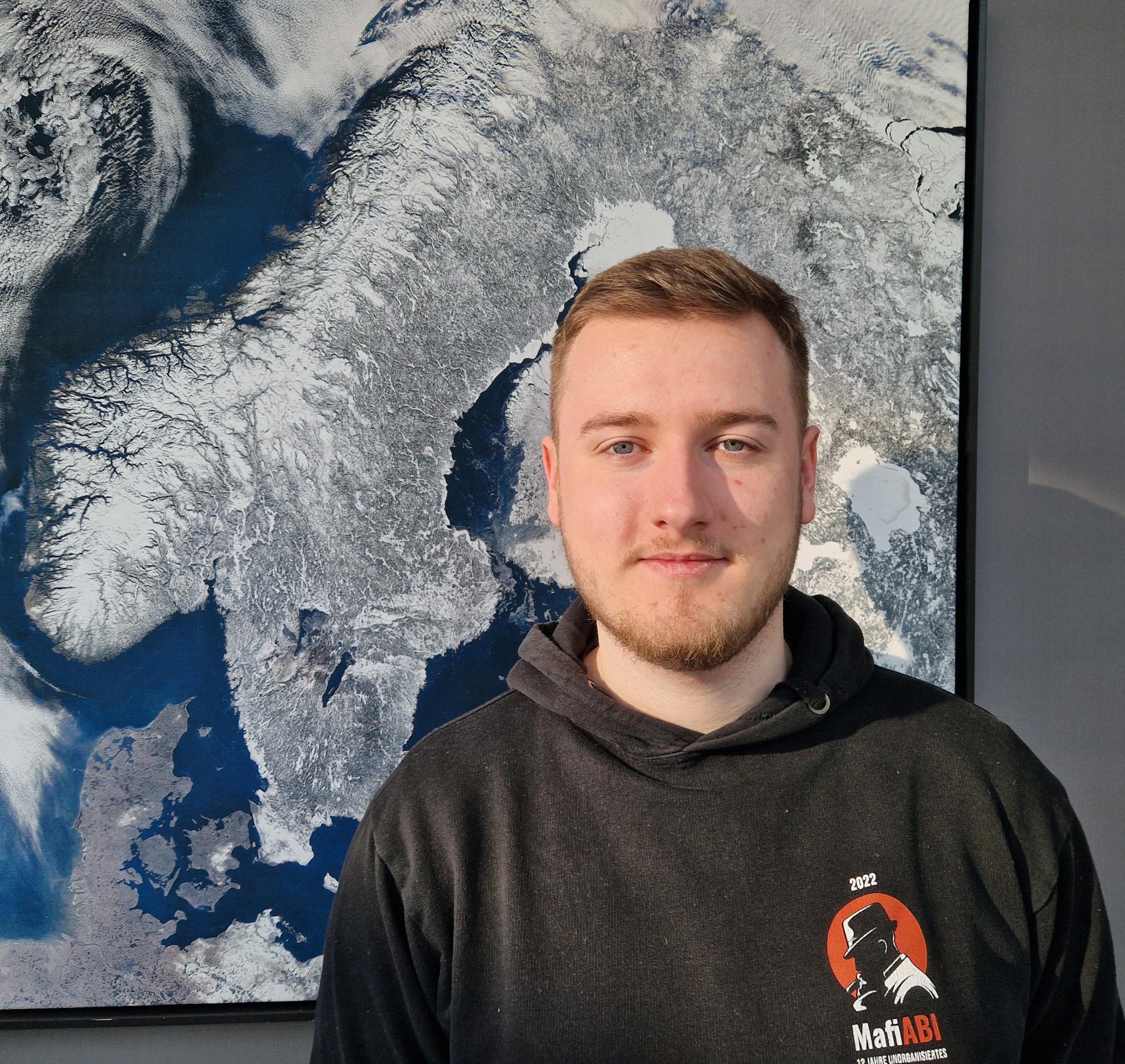
First day at IOW for Noah Boest [02.02.2026]
Today, Noah Boest joins the team of organic trace substance analysts. Noah will first familiarize himself with the IOW and the laboratories and learn all about pollutant analysis in the monitoring program. His future responsibilities will also include sampling at sea, laboratory organization, and the development of analytical methods. Welcome!
Projects
Ongoing Projects
- MPn-Baltic Sea: Occurrence and distribution of methylphosphonate and its contribution to oxic methane formation in the Baltic Sea
DFG - Deutsche Forschungsgemeinschaft (01.02.2026 - 31.03.2029), Principal Investigators: Dr. Marion Kaniwscher, Dr. Oliver Schmale - KOFI: Studie zur Entwicklung von Kohlenstoffspeicherung und Biodiversität nach Ausschluss der Fischerei im Natura2000-Gebiet Fehmarnbelt
BfN - Bundesamt für Naturschutz (01.11.2025 - 31.03.2030), Principal Investigator: Prof. Dr. Klaus Jürgens - PICASSO SCHMALE: Prozesseinblicke in die Quellen und Senken von Methan im Auftragsgebiet von Concepcion
DFG - Deutsche Forschungsgemeinschaft (01.09.2024 - 31.12.2026), Principal Investigator: Dr. Oliver Schmale
Ended Projects
- PlumeBaSe: Tracing of ship plumes and impact to seawater
DFG - Deutsche Forschungsgemeinschaft (01.09.2022 - 31.05.2026), Principal Investigator: Dr. Helena Osterholz - OTC-Genomics: OTC Rostock: Innovative Analyseverfahren für die Umweltüberwachung aquatischer Lebensräume auf der Grundlage von Nukeinsäurerequenzierung
BMBF - Bundesministerium für Bildung und Forschung (01.11.2021 - 31.01.2025), Principal Investigator: Prof. Dr. Matthias Labrenz - SEAM: Zu einer verbesserten Umweltbewertung und -überwachung in der Ostsee
BONUS (01.11.2018 - 31.05.2020), Principal Investigator: Prof. em. Schulz-Bull - PROSO: PROSO - Prozesse von Spurenstoffen in der Ostsee
BMBF - Bundesministerium für Bildung und Forschung (01.04.2017 - 31.12.2018), Principal Investigator: Prof. em. Dr. Schulz-Bull - Leibniz ScienceCampus Phosphorus Research Rostock
Leibniz Association (01.09.2013-31.07.2015, 01.04.2015-30.06.2019), Principal Investigator: Prof. em. Dr. Bathmann
Theses
Ongoing Ph.D. Theses
- Paul Cwierz: Influence of scrubber technology on the chemical composition of ship emissions
- Jann-Gerrit Müller: Impact of natural organic matter on the fate of anthropogenic pollutants in the nearshore Baltic Sea
Finished Ph.D. Theses
- Tassiana Serafim: Distribution and fate of thermogenic organic compounds in marine environments, University of Rostock, 2026
- Mo Zhou: Analysis of polychlorinated biphenyls (PCB) in the Baltic Sea, University of Rostock, 2024
- Marisa Wirth: Analysis of Organophosphorus Compounds in the Marine Environment, University of Rostock, University of Rostock, 2020
- Lisa Rönspieß: Importance of the lower Warnow for P-Concentrations, P-Transformations, P-Retention and P-Bioavailability, University of Rostock, 2020
- Friederike Habedank: Analysis of organo phosphorus pesticides in surface and Baltic Sea water, University of Rostock, 2020
- Constantin Recknagel: Significance of organic Phosphorous Compounds for the Baltic Sea: Inositol Phosphates and Phospholipids, University of Rostock, 2020
- Kathrin Fisch: Occurrence and transport of polar pollutants in coastal ecosystems, University of Rostock, 2018
- Karoline Hammer: Effect of Organic Compounds on the Acid-base System of the Baltic Sea, University of Rostock, 2017
- Janne Hähnel: Studies for the Characterization of novel Oil binding Materials and for the Determination of the Oil degradation Perfomance of a Microorganism Consortium from the Baltic Sea, University of Rostock, 2017
- Wael Skeff: Polar Herbicides in the German Baltic Estuaries - Analysis, Occurrence and Effects, University of Rostock, 2015
- David Meyer: Investigation of redox sensitive compounds in the pelagic redoxcline using in situ measurements, University of Rostock, 2013
Master Theses
- Helene Felsmann: Molecular-level Determination of Dissolved Organic Matter Composition in the Gotland Deep (Baltic Sea)
- Paul Cwierz: Determination of Methylphosphonic Acid in Water Samples near the Baltic Sea using Electrodialysis and GC-MS, University of Rostock
- Kai Wilschnack: Development of an ASE-Method for the Detection of modern Contaminants in the particulate Phase, University of Rostock, 2019
- Moritz Sievers: Studies for the Recovery of Bulk Parameters (DOC, DOP, DON) after the Electrodialysis of Seawater, University of Rostock, 2018
- Marisa Wirth: Interactions between Marine Snow and Macondo Oil spilled during the Deepwater Horizon Accident, Universität Rostock, 2017
- Eric Tollkühn: Optimization and Validation of the Analysis of Pyrrolizidine Alkaloids in Honey, Herbs and Infant Foods using HILIC-RP-LC-MS/MS, University of Rostock, 2017
- Carina Deich: Polycyclic Aromatic Hydrocarbons and Chlorinated Hydrocarbons in Surface Waters of the oligotrophic North-East Atlantic, University of Rostock, 2016
- Yvonne Düwel: Adsorption of Glyphosate, AMPA and Glufosinate to Baltic Sea Sediments, University of Rostock, 2016
- Lina Westphal: Determination of Organotin Compounds in Sediments of the Baltic Sea, University of Rostock, 2015
- Kathrin Fisch: Enrichment and Detection of Phenoxy-, Triazine-, Urea Pesticides and other Organic Contaminants in Water using SPE and HPLC-MS/MS, University of Rostock, 2014
- Florian Cordes: Analysis of Pt, Re, Se and Te using Q-ICP-MS for the Reconstruction of Redox Conditions in Modern and Pre-Industrial Baltic Sea Sediments, University of Rostock, 2014
- Eva Fritzsche: Determination of Organic Trace Compounds in the Baltic Sea by modern Mass Spectrometic Methods, Chemnitz University of Technology, 2013
Bachelor Theses
- Nelly Bimberg: Phytoplankton succession in coastal Baltic Sea: Heiliegendamm time series 1988-2000, University of Rostock, 2021
- Hannes Lüdtke: Investigations of the Seasonal Influence on the Concentrations of the Herbicide Glyphosate and its Metabolite AMPA in the Warnow River
- Anna Pudelko: Optimization of individual Process Steps for the Automated Sample Preparation using Freestyle Xana in the Field of the Analysis of Organic Trace Compounds in Marine Environment, Hochschule für Technik und Wirtschaft Dresden, March 2019
- Julian Schade: Polychlorinated Biphenyls in Sediments of the Black Sea, University of Rostock, 2014
- Carina Deich: Method Development for the Determination of Particle-Bound Glyphosate in the Marine Environment, University of Rostock, 2014
Publications
2026
- Bartosiewicz, M., P. J. Cabello-Yeves, E. M. Eckert, A. Di Cesare, R. J. Puxty, A. Przytulska, H. Osterholz, A. Meibom, S. Escrig, N. Dzhembekova, J. Zopfi, M. F. Lehmann and C. Callieri (2026). Black Sea picocyanobacteria exploit ancestral traits for energy and chlorophyll production in dark anoxia. ISME Commun., doi: 10.1093/ismeco/ycag159
- Bendl, J., S. Piel, A. Schüller, H. Osterholz and T. Adam (2026). Mobile mapping of PM and PNC in a Baltic Sea harbour city: spatio-temporal variability and local ship-related emission events. Atmos. Pollut. Res. online: 103182, doi: 10.1016/j.apr.2026.103182
- Cai, R., O. J. Lechtenfeld, A. J. Tanentzap, J. P. Sachs, S. J. Kao, H. Osterholz, Z. Yan, C. Zhao, Y. Yi, P. Li, C. Zhang, N. Jiao, B. P. Koch, G. J. Herndl and D. He (2026). Rapid microbial production of long-lived dissolved organic carbon in the global ocean. Proc. Nat. Acad. Sci. U.S.A. 123: e2601044123, doi: 10.1073/pnas.2601044123
- Hovorka, J., D. Smok, S. K. Piel, H. Osterholz, T. Gröger and R. Zimmermann (2026). Distribution of Aerosol Particles from Diesel Engines Behind Cruising Ships in the Baltic Sea. J. Mar. Sci. Eng. 14: 1180, doi: 10.3390/jmse14131180
- Kanwischer, M., M. A. Wirth, A. H. Arias, M. Voss, M. Labrenz and D. E. Schulz-Bull (2026). Seasonal patterns and degradation of glyphosate and AMPA in the Baltic Sea. Mar. Poll. Bull. 232: 120024, doi: 10.1016/j.marpolbul.2026.120024
- Müller, J.-G. T., H. Osterholz and M. Kanwischer (2026). Dissolved organic matter quality and emerging pollutants in coastal Baltic Sea waters: Insights into photodegradation. Environ. Adv. 26: 100755, doi: 10.1016/j.envadv.2026.100755
- Peter, C., H.-A. Giebel, B. C. Chai, T. S. G. Serafim, C. Lehners, O. Wurl, H. Osterholz and J. Rahlff (2026). Surface slicks structure microbial and viral neuston in relation to biogeochemical conditions. Limnol. Oceanogr. 71: e70387, doi: 10.1002/lno.70387
- Piel, S. K., T. M. Gröger, H. Czech, H. Hakkim, J. Passig, J. Hovorka, H. Osterholz, M. Vojtisek-Lom, T. W. Adam and R. Zimmermann (2026). In Situ Collection and Photochemical Aging of Individual Ship Plumes Captured at Sea. Environ. Sci. Technol. Lett. online: online, doi: 10.1021/acs.estlett.6c00695
- Sakpal, H., M. Kanwischer, D. E. Schulz-Bull, A. Philippe and K. Fisch (2026). Spatio-temporal patterns and transport pathways of UV filters in the Western Baltic Sea. Emerg. Contam.: 100756, doi: 10.1016/j.emcon.2026.100756
- Sakpal, H., M. Kanwischer, I. Stachewicz, J. Müller, D. E. Schulz-Bull and K. Fisch (2026). Time-of-day dependent UV filter concentrations and derived risk estimates at a recreational site. Environmental Advances 24: 100715, doi: 10.1016/j.envadv.2026.100715
- Sartori, É., C. d. S. Vergilio, T. S. G. Serafim, D. Lacerda, L. S. do Nascimento, P. V. Gatts, M. Freitas, J. T. Nasser, M. G. de Almeida, C. C. Martins, N. E. Asp and C. E. de Rezende (2026). Land-use impacts on Amazon and Atlantic rainforest coastal ecosystems revealed by multiple biogeochemical markers. Mar. Poll. Bull. 230: 119899, doi: 10.1016/j.marpolbul.2026.119899
- Schwarz, C., C. Gehm, T. Kröger-Badge, T. Streibel, B. Raupers, D. Niethammer, D. Starostin-Penner, H. Lüdtke, J. Passig, S. Ehlert, D. Schulz-Bull, E. Achterberg and R. Zimmermann (2026). Development of a Ship-Based Membrane Inlet Photoionization Mass Spectrometer (MI-PIMS) for Online Detection of Explosives in Seawater. Anal. Chem. 98, 23: 16936–16948, doi: 10.1021/acs.analchem.6c00018
- Schwarz, C., C. Gehm, T. Kröger-Badge, T. Streibel, B. Raupers, D. Niethammer, D. Starostin-Penner, H. Lüdtke, J. Passig, S. Ehlert, D. Schulz-Bull, E. Achterberg and R. Zimmermann (2026). Development of a Ship-Based Membrane Inlet Photoionization Mass Spectrometer (MI-PIMS) for Online Detection of Explosives in Seawater. Anal. Chem. 98: 16936–16948, doi: 10.1021/acs.analchem.6c00018
- Serafim, T. S. G., H. Simon, J. Niggemann, C. P. Rüger, R. Zimmermann, T. N. L. Mairon, J. J. Waniek and H. Osterholz (2026). Differential Drivers of Thermogenic and Bulk Dissolved Organic Matter in the Indian Ocean. Glob. Biogeochem. Cycles 40: e2025GB008975, doi: 10.1029/2025GB008975
2025
- Katz, S. D., H. Osterholz, R. Barton, E. R. M. Druffel, X. Gao, C. A. Masiello, C. Santin, T. S. G. Serafim, S. Wagner, M. Zabel and R. Lohmann (2025). Changes in pyrogenic tracers over the last 15,000 years in the Congo river catchment through multi-method analysis. J. Geophys. Res. Biogeosciences 130: e2025JG008772, doi: 10.1029/2025JG008772
- Kuss, J., U. Gräwe, B. Cahill, V. Mohrholz, M. Naumann, R. Mars, S. Krüger, D. E. Schulz-Bull and J. J. Waniek (2025). Highly variable bottom water oxygen concentration in the shallow Arkona Basin (Baltic Sea). J. Mar. Syst. 252: 104134, doi: 10.1016/j.jmarsys.2025.104134
- Lønborg, C., I. Fuentes-Santos, C. Carreira, V. Amaral, J. Arístegui, P. Bhadury, M. B. Bif, M. L. Calleja, Q. Chen, L. C. Cotovicz Jr., S. Cozzi, B. D. Eyre, E. E. García-Martín, M. Giani, R. Gonçalves-Araujo, R. Gruber, D. A. Hansell, J. M. Holding, W. Hunter, J. S. P. Ibánhez, V. Ibello, P. Kowalczuk, F. Maggioni, P. Magni, P. Martin, S. L. McCallister, X. A. G. Morán, J. M. Oakes, H. Osterholz, H. Park, D. Rueda-Roa, J. Shan, E. Teira, N. Ward, Y. Yamashita, L. Yang, Q. Zheng and X. A. Álvarez-Salgado (2025). Dissolved Organic Carbon in Coastal Waters: Global Patterns, Stocks and Environmental Physical Controls. Glob. Biogeochem. Cycles 39: e2024GB008407, doi: 10.1029/2024GB008407
- Reineccius, J., M. Zhou, I. Hand, D. E. Schulz-Bull and J. J. Waniek (2025). Temporal and spatial distribution of chlorinated hydrocarbons in surface sediments of the Baltic Sea and Skagerrak over the past 30 years. Sci. Total Environ. 982: 179647, doi: 10.1016/j.scitotenv.2025.179647
- Serafim, T. S. G., D. E. Schulz-Bull, C. P. Rüger, T. Dittmar, J. Niggemann, R. Zimmermann, J. J. Waniek and H. Osterholz (2025). Imprint of incomplete combustion processes on the water column of the anthropogenic-pressured Baltic Sea. Sci. Total Environ. 964: 178537, doi: 10.1016/j.scitotenv.2025.178537
- Vogel, L., T. Sperlea, K. Fisch, C. C. Glackin, E. Zschaubitz, D. E. Schulz-Bull, M. Labrenz and M. Kanwischer (2025). High-resolution sampling reveals a considerable year-round risk potential for aquatic organisms in an urban estuary of the Baltic Sea due to anthropogenic pollution mixture. Environ. Poll. 383: 126916, doi: 10.1016/j.envpol.2025.126916
- Voss, M., P. Holtermann, S. Ahmerkamp, D. L. Arévalo Martínez, B. Cahill, M. Chouksey, J. W. Dippner, J. Dutz, P. Feldens, J. Geersen, K. Gentsch, M. Gogina, D. Herlemann, J. Henkel, M. Kanwischer, B. Krebs, A. Kremp, A. Malissery, R. Mars, J. Müller, S. Neubert, H. Osterholz, H. Radtke, G. Rehder, K. Romoth, M. Sass, I. Sassenhagen, O. Schmale, M. v. Thenen, M. v. Weber and O. Zielinski (2025). Coastal zones of the Baltic Sea in the Anthropocene: Current state and the impact of climate change. Estuar. Coast. Shelf Sci. 326: 109504, doi: 10.1016/j.ecss.2025.109504
- Wang, J., L. Qu, H. Osterholz, Y. Qi, X. Zeng, E. Bai and C. Wang (2025). Effects of DOM Chemodiversity on Microbial Diversity in Forest Soils on a Continental Scale. Glob. Change Biol. 31: e70131, doi: 10.1111/gcb.70131
- Waniek, J. J., H. Osterholz and H. C. Frazão (2025). A Global Inventory of Natural and Synthetic Estrogens in Aquatic Systems. Annu. Rev. Mar. Sci. 17: 511-536, doi: 10.1146/annurev-marine-032123-025855
- Yi, Y., A. J. Tanentzap, C. He, J. Merder, H. Osterholz, H. Bao, J. A. Hawkes, R. Cai, S.-L. Li, Q. Shi, S. Xu, C. Zhang, C.-Q. Liu, M. Zhao and D. He (2025). Underestimated input of terrestrial dissolved organic carbon to the ocean. Proc. Nat. Acad. Sci. U.S.A. 122: e2505838122, doi: 10.1073/pnas.2505838122
- Zhou, M., I. Hand, A. Lerz, M. Moros, D. E. Schulz Bull and J. J. Waniek (2025). Temporal development of chlorinated hydrocarbons in the Baltic Sea sediments: Characterization of the pollution maximum. Sci. Total Environ. 962: 178395, doi: 10.1016/j.scitotenv.2025.178395
2024
- Bruhns, T., C. Sánchez-Girón Barba, L. König, S. Timm, K. Fisch and I. M. Sokolova (2024). Combined effects of organic and mineral UV-filters on the lugworm Arenicola marina. Chemosphere 358: 142184, doi: 10.1016/j.chemosphere.2024.142184
- Lønborg, C., C. Carreira, G. Abril, S. Agustí, V. Amaral, A. Andersson, J. Arístegui, P. Bhadury, M. B. Bif, A. V. Borges, S. Bouillon, M. L. Calleja, L. C. Cotovicz Jr, S. Cozzi, M. Doval, C. M. Duarte, B. Eyre, C. G. Fichot, E. E. García-Martín, A. Garzon-Garcia, M. Giani, R. Gonçalves-Araujo, R. Gruber, D. A. Hansell, F. Hashihama, D. He, J. M. Holding, W. R. Hunter, J. S. P. Ibánhez, V. Ibello, S. Jiang, G. Kim, K. Klun, P. Kowalczuk, A. Kubo, C.-W. Lee, C. B. Lopes, F. Maggioni, P. Magni, C. Marrase, P. Martin, S. L. McCallister, R. McCallum, P. M. Medeiros, X. A. G. Morán, F. E. Muller-Karger, A. Myers-Pigg, M. Norli, J. M. Oakes, H. Osterholz, H. Park, M. Lund Paulsen, J. A. Rosentreter, J. D. Ross, D. Rueda-Roa, C. Santinelli, Y. Shen, E. Teira, T. Tinta, G. Uher, M. Wakita, N. Ward, K. Watanabe, Y. Xin, Y. Yamashita, L. Yang, J. Yeo, H. Yuan, Q. Zheng and X. A. Álvarez-Salgado (2024). A global database of dissolved organic matter (DOM) concentration measurements in coastal waters (CoastDOM v1). Earth Syst. Sci. Data 16: 1107-1119, doi: 10.5194/essd-16-1107-2024
- Riedinger, D. J., V. Fernández-Juárez, L. F. Delgado, T. Sperlea, C. Hassenrück, D. P. R. Herlemann, C. Pansch, M. Kataržytė, F. Bruck, A. Ahrens, M. Rakowski, K. Piwosz, A. Stevenson, T. B. H. Reusch, G. Gyraitė, D. Schulz-Bull, H. Benterbusch-Brockmöller, S. Kube, S. Dupke, A. F. Andersson, L. Riemann and M. Labrenz (2024). Control of Vibrio vulnificus proliferation in the Baltic Sea through eutrophication and algal bloom management. Commun. Earth Environ. 5: 246, doi: 10.1038/s43247-024-01410-x
- Steinkopf, M., U. Krumme, D. Schulz-Bull, D. Wodarg and N. Loick-Wilde (2024). Trophic lengthening triggered by filamentous, N2-fixing cyanobacteria disrupts pelagic but not benthic food webs in a large estuarine ecosystem. Ecol. Evol. 14: e11048, doi: 10.1002/ece3.11048
2023
- Deich, C., M. Kanwischer, R. Zhang and J. J. Waniek (2023). Natural and synthetic estrogenic compounds in the Pearl River Estuary and northern shelf of the South China Sea. Oceanologia 65: 30-43, doi: 10.1016/j.oceano.2021.08.001
- Jeong, S., J. Bendl, M. Saraji-Bozorgzad, U. Käfer, U. Etzien, J. Schade, M. Bauer, G. Jakobi, J. Orasche, K. Fisch, P. P. Cwierz, C. P. Rüger, H. Czech, E. Karg, G. Heyen, M. Krausnick, A. Geissler, C. Geipel, T. Streibel, J. Schnelle-Kreis, M. Sklorz, D. E. Schulz-Bull, B. Buchholz, T. Adam and R. Zimmermann (2023). Aerosol emissions from a marine diesel engine running on different fuels and effects of exhaust gas cleaning measures. Environ. Poll. 316: 120526, doi: 10.1016/j.envpol.2022.120526
- Kajan, K., H. Osterholz, J. Stegen, M. Gligora Udovič and S. Orlić (2023). Mechanisms shaping dissolved organic matter and microbial community in lake ecosystems. Water Res. 245: 120653, doi: 10.1016/j.watres.2023.120653
- Kanwischer, M., T. Klintzsch and O. Schmale (2023). Stable isotope approach to assess the production and consumption of methylphosphonate and its contribution to oxic methane formation in surface waters. Environ. Sci. Technol. 57: 15904-15913, doi: 10.1021/acs.est.3c04098
- Rosewig, E. I., J. Schade, J. Passig, H. Osterholz, R. Irsig, D. Smok, N. Gawlitta, J. Schnelle-Kreis, J. Hovorka, D. Schulz-Bull, R. Zimmermann and T. W. Adam (2023). Remote detection of different marine fuels in exhaust plumes by onboard measurements in the Baltic Sea using single-particle mass spectrometry. Atmosphere 14: 849, doi: 10.3390/atmos14050849
- Soares Gonçalves Serafim, T., M. Gomes de Almeida, G. Thouzeau, E. Michaud, J. Niggemann, T. Dittmar, M. Seidel and C. E. de Rezende (2023). Land-use changes in Amazon and Atlantic rainforests modify organic matter and black carbon compositions transported from land to the coastal ocean. Sci. Total Environ. 878: 162917, doi: 10.1016/j.scitotenv.2023.162917
2022
- Braga, L. P. P., C. Orland, E. J. S. Emilson, A. A. Fitch, H. Osterholz, T. Dittmar, N. Basiliko, N. C. S. Mykytczuk and A. J. Tanentzap (2022). Viruses direct carbon cycling in lake sediments under global change. Proc. Nat. Acad. Sci. U.S.A. 119: e2202261119, doi: 10.1073/pnas.2202261119
- Duerschlag, J., W. Mohr, T. G. Ferdelman, J. LaRoche, D. Desai, P. L. Croot, D. Voß, O. Zielinski, G. Lavik, S. Littmann, C. Martínez-Pérez, B. Tschitschko, N. Bartlau, H. Osterholz, T. Dittmar and M. M. M. Kuypers (2022). Niche partitioning by photosynthetic plankton as a driver of CO2-fixation across the oligotrophic South Pacific Subtropical Ocean. ISME J. 16: 465–476, doi: 10.1038/s41396-021-01072-z
- Frazão, H. C., R. D. Prien, D. E. Schulz-Bull, D. Seidov and J. J. Waniek (2022). The forgotten Azores Current: A long-term perspective. Front. Mar. Sci. 9: 842251, doi: 10.3389/fmars.2022.842251
- Hildebrand, T., H. Osterholz, C. Bunse, H. Grotheer, T. Dittmar and P. J. Schupp (2022). Transformation of dissolved organic matter by two Indo-Pacific sponges. Limnol. Oceanogr. 67: 2483-2496, doi: 10.1002/lno.12214
- Kanwischer, M., N. Asker, A.-S. Wernersson, M. A. Wirth, K. Fisch, E. Dahlgren, H. Osterholz, F. Habedank, M. Naumann, J. Mannio and D. E. Schulz-Bull (2022). Substances of emerging concern in Baltic Sea water: Review on methodological advances for the environmental assessment and proposal for future monitoring. Ambio 51: 1588-1608, doi: 10.1007/s13280-021-01627-6
- Kurek, M. R., A. Stubbins, T. W. Drake, T. Dittmar, J. M. S. Moura, R. M. Holmes, H. Osterholz, J. Six, J. N. Wabakanghanzi, B. Dinga, M. Mitsuya and R. G. M. Spencer (2022). Organic molecular signatures of the Congo river and comparison to the Amazon. Glob. Biogeochem. Cycles 36: e2022GB007301, doi: 10.1029/2022GB007301
- Menges, J., N. Hovius, S. Poetz, H. Osterholz and D. Sachse (2022). Particulate organic matter mobilization and transformation along a Himalayan river revealed by ESI-FT-ICR-MS. J. Geophys. Res. Biogeosciences 127: e2022JG007126, doi: 10.1029/2022JG007126
- Osterholz, H., S. Turner, L. J. Alakangas, E.-L. Tullborg, T. Dittmar, B. E. Kalinowski and M. Dopson (2022). Terrigenous dissolved organic matter persists in the energy-limited deep groundwaters of the Fennoscandian Shield. Nat. Commun. 13: 4837, doi: 10.1038/s41467-022-32457-z
- Selak, L., H. Osterholz, I. Stanković, N. Hanžek, M. Gligora Udovič, T. Dittmar and S. Orlić (2022). Adaptations of microbial communities and dissolved organics to seasonal pressures in a mesotrophic coastal Mediterranean lake. Environ. Microbiol. 24: 2282-2298, doi: 10.1111/1462-2920.15924
- Shah Walter, S. R., U. Jaekel, H. Osterholz, A. T. Fisher, J. A. Huber, A. Pearson, T. Dittmar and P. R. Girguis (2023). Addendum: Microbial decomposition of marine dissolved organic matter in cool oceanic crust. Nat. Geosci. 16: 190-191, doi: 10.1038/s41561-022-01107-w
2021
- Falfushynska, H., E. P. Sokolov, K. Fisch, H. Gazie, D. E. Schulz-Bull and I. M. Sokolova (2021). Biomarker-based assessment of sublethal toxicity of organic UV filters (ensulizole and octocrylene) in a sentinel marine bivalve Mytilus edulis. Sci. Total Environ. 798: 149171, doi: 10.1016/j.scitotenv.2021.149171
- Fisch, K., B. Brockmeyer, W. Gerwinski, D. E. Schulz-Bull and N. Theobald (2021). Seasonal variability, long-term distribution (2001–2014), and risk assessment of polar organic micropollutants in the Baltic Sea. Environmental Science and Pollution Research 28: 39296-39309, doi: 10.1007/s11356-021-13254-5
- Fisch, K., R. Zhang, M. Zhou, D. E. Schulz-Bull and J. J. Waniek (2021). PPCPs - A human and veterinary fingerprint in the Pearl River delta and northern south China sea. Emerging Contaminants 7: 10-21, doi: 10.1016/j.emcon.2020.11.006
- Frazão, H. C., R. D. Prien, T. J. Müller, D. E. Schulz-Bull and J. J. Waniek (2021). 30 years of temporal variability of temperature and currents below the main thermocline between 1980-2009 in the subtropical Northeast Atlantic (Kiel 276, 33°N, 22°W). J. Mar. Syst. 217: 103517, doi: 10.1016/j.jmarsys.2021.103517
- Gehm, C., T. Streibel, S. Ehlert, D. Schulz-Bull and R. Zimmermann (2021). External trap-and-release membrane inlet for photoionization mass spectrometry: Towards fast direct analysis of aromatic pollutants in aquatic systems. Rapid Commun. Mass Spectrom. 35: e8863, doi: 10.1002/rcm.8863
- Kurek, M. R., A. Stubbins, T. W. Drake, J. M. S. Moura, R. M. Holmes, H. Osterholz, T. Dittmar, B. Peucker-Ehrenbrink, M. Mitsuya and R. G. M. Spencer (2021). Drivers of organic molecular signatures in the Amazon River. Glob. Biogeochem. Cycles 35: e2021GB006938, doi: 10.1029/2021GB006938
- Kuss, J., H. C. Frazão, D. E. Schulz-Bull, Y. Zhong, Y. Gao and J. J. Waniek (2021). The impact of typhoon “Mangkhut” on surface water nutrient and chlorophyll inventories of the South China Sea in September 2018. J. Geophys. Res. Biogeosciences 126: e2021JG006546, doi: 10.1029/2021JG006546
- Osterholz, H., C. Burmeister, S. Busch, M. Dierken, H. C. Frazão, R. Hansen, J. Jeschek, A. Kremp, L. Kreuzer, B. Sadkowiak, J. J. Waniek and D. E. Schulz-Bull (2021). Nearshore dissolved and particulate organic matter dynamics in the southwestern Baltic Sea: Environmental drivers and time series analysis (2010–2020). Front. Mar. Sci. 8: 795028, doi: 10.3389/fmars.2021.795028
- Osterholz, H., D. P. A. Kilgour, D. S. Storey, G. Lavik, T. G. Ferdelman, J. Niggemann and T. Dittmar (2021). Accumulation of DOC in the South Pacific Subtropical Gyre from a molecular perspective. Mar. Chem. 231: 103955, doi: 10.1016/j.marchem.2021.103955
- Rönspieß, L., G. Nausch and D. Schulz-Bull (2021). Bioavailability of various phosphorus fractions and their seasonality in a eutrophic estuary in the southern Baltic Sea - a laboratory approach. Front. Mar. Sci. 8: 715238, doi: 10.3389/fmars.2021.715238
- Triesch, N., M. van Pinxteren, S. Frka, C. Stolle, T. Spranger, E. H. Hoffmann, X. Gong, H. Wex, D. Schulz-Bull, B. Gasparovic and H. Herrmann (2021). Concerted measurements of lipids in seawater and on submicrometer aerosol particles at the Cabo Verde islands: biogenic sources, selective transfer and high enrichments. Atmos. Chem. Phys. 21: 4267-4283, doi: 10.5194/acp-21-4267-2021
- Wirth, M. A., D. E. Schulz-Bull and M. Kanwischer (2021). The challenge of detecting the herbicide glyphosate and its metabolite AMPA in seawater - Method development and application in the Baltic Sea. Chemosphere 262: 128327, doi: 10.1016/j.chemosphere.2020.128327
- Wirth, M. A., L. Longwitz, M. Kanwischer, P. Gros, P. Leinweber and T. Werner (2021). AMPA-15N – Synthesis and application as standard compound in traceable degradation studies of glyphosate. Ecotox. Environ. Safe. 225: 112768, doi: 10.1016/j.ecoenv.2021.112768
- Yu, S., F. Chen, X. Jing, C. Chen, C. Zhuang, Q. Li, Y. Zhou, Z. Xia, H. Gan, K. Fisch and J. J. Waniek (2021). Increasing terrigenous pollen input in the late Holocene: Indications of intensive human activity and accelerated delta plain progradation. Mar. Geol. 439: 106547, doi: 10.1016/j.margeo.2021.106547
2020
- Deich, C., M. Kanwischer, M. Jähne and J. J. Waniek (2020). Patterns of estrogenic activity in the Baltic Sea. Chemosphere 240: 124870, doi: 10.1016/j.chemosphere.2019.124870
- Gros, P., R. Meissner, M. A. Wirth, M. Kanwischer, H. Rupp, D. E. Schulz-Bull and P. Leinweber (2020). Leaching and degradation of 13C2-N-15-glyphosate in field lysimeters. Environ. Monit. Assess. 192: 127, doi: 10.1007/s10661-019-8045-4
- Habedank, F., F. Feldhusen, D. Schulz-Bull and M. Kanwischer (2020). Analysis of organophosphate pesticides in surface water - Comparison of method optimization approaches. J. Chemometr. 34: e3220, doi: 10.1002/cem.3220
- Hawkes, J. A., J. D'Andrilli, J. N. Agar, M. P. Barrow, S. M. Berg, N. Catalán, H. Chen, R. K. Chu, R. B. Cole, T. Dittmar, R. Gavard, G. Gleixner, P. G. Hatcher, C. He, N. J. Hess, R. H. S. Hutchins, A. Ijaz, H. E. Jones, W. Kew, M. Khaksari, D. C. Palacio Lozano, J. Lv, L. R. Mazzoleni, B. E. Noriega-Ortega, H. Osterholz, N. Radoman, C. K. Remucal, N. D. Schmitt, S. K. Schum, Q. Shi, C. Simon, G. Singer, R. L. Sleighter, A. Stubbins, M. J. Thomas, N. Tolic, S. Zhang, P. Zito and D. C. Podgorski (2020). An international laboratory comparison of dissolved organic matter composition by high resolution mass spectrometry: Are we getting the same answer? Limnol. Oceanogr. Meth. 18: 235-258, doi: 10.1002/lom3.10364
- Kaiser, J., N. Wasmund, M. Kahru, A. K. Wittenborn, R. Hansen, K. Häusler, M. Moros, D. Schulz-Bull and H. W. Arz (2020). Reconstructing N2-fixing cyanobacterial blooms in the Baltic Sea beyond observations using 6- and 7-methylheptadecane in sediments as specific biomarkers. Biogeosciences 17: 2579-2591, doi: 10.5194/bg-17-2579-2020
- Kanwischer, M., D. Bunke, T. Leipe, M. Moros and D. E. Schulz-Bull (2020). Polycyclic aromatic hydrocarbons in the Baltic Sea - Pre-industrial and industrial developments as well as current status. Mar. Poll. Bull. 160: 111526, doi: 10.1016/j.marpolbul.2020.111526
- Kuss, J., G. Nausch, C. Engelke, M. v. Weber, H. Lutterbeck, M. Naumann, J. J. Waniek and D. E. Schulz-Bull (2020). Changes of nutrient concentrations in the western Baltic Sea in the transition between inner coastal waters and the central basins: Time series from 1995 to 2016 with source analysis. Front. Earth Sci. 8: 106, doi: 10.3389/feart.2020.00106
- Lohrer, C., P. P. Cwierz, M. A. Wirth, D. E. Schulz-Bull and M. Kanwischer (2020). Methodological aspects of methylphosphonic acid analysis: Determination in river and coastal water samples. Talanta 211: 120724, doi: 10.1016/j.talanta.2020.120724
- Merder, J., J. A. Freund, U. Feudel, C. T. Hansen, J. A. Hawkes, B. Jacob, K. Klaproth, J. Niggemann, B. E. Noriega-Ortega, H. Osterholz, P. E. Rossel, M. Seidel, G. Singer, A. Stubbins, H. Waska and T. Dittmar (2020). ICBM-OCEAN: Processing ultrahigh-resolution mass spectrometry data of complex molecular mixtures. Anal. Chem. 92: 6832-6838, doi: 10.1021/acs.analchem.9b05659
- Miranda, M. L., H. Osterholz, H. A. Giebel, P. Bruhnke, T. Dittmar and O. Zielinski (2020). Impact of UV radiation on DOM transformation on molecular level using FT-ICR-MS and PARAFAC. Spectroc. Acta Pt. A - Molec. Biomolec. Spectr. 230: 118027, doi: 10.1016/j.saa.2020.118027
- Rönspieß, L., O. Dellwig, X. Lange, G. Nausch and D. Schulz-Bull (2020). Spatial and seasonal phosphorus dynamics in a eutrophic estuary of the southern Baltic Sea. Estuar. Coast. Shelf Sci. 233: 106532, doi: 10.1016/j.ecss.2019.106532
- Steen, A. D., S. Kusch, H. A. Abdulla, N. Cakić, S. Coffinet, T. Dittmar, J. M. Fulton, V. Galy, K.-U. Hinrichs, A. E. Ingalls, B. P. Koch, E. Kujawinski, Z. Liu, H. Osterholz, D. Rush, M. Seidel, J. Sepúlveda and S. G. Wakeham (2020). Analytical and computational advances, opportunities, and challenges in marine organic biogeochemistry in an era of “Omics”. Front. Mar. Sci. 7: 718, doi: 10.3389/fmars.2020.00718
- van Pinxteren, M., K. W. Fomba, N. Triesch, C. Stolle, O. Wurl, E. Bahlmann, X. Gong, J. Voigtländer, H. Wex, T.-B. Robinson, S. Barthel, S. Zeppenfeld, E. H. Hoffmann, M. Roveretto, C. Li, B. Grosselin, V. Daële, F. Senf, D. van Pinxteren, M. Manzi, N. Zabalegui, S. Frka, B. Gašparovi´c, R. Pereira, T. Li, L. Wen, J. Li, C. Zhu, H. Chen, J. Chen, B. Fiedler, W. von Tümpling, K. A. Read, S. Punjabi, A. C. Lewis, J. R. Hopkin, L. J. Carpenter, I. Peeken, T. Rixen, D. Schulz-Bul, M. E. Monge, A. Mellouki, C. George, F. Stratmann and H. Herrmann (2020). Marine organic matter in the remote environment of the Cape Verde islands - an introduction and overview to the MarParCloud campaign. Atmos. Chem. Phys. 20: 6921-6951, doi: 10.5194/acp-20-1-2020
2019
- Chikwililwa, C., P. McCarron, J. J. Waniek and D. E. Schulz-Bull (2019). Phylogenetic analysis and yessotoxin profiles of Gonyaulax spinifera cultures from the Benguela Current upwelling system. Harmful Algae 85: 101626, doi: 10.1016/j.hal.2019.101626
- Eglite, E., M. Graeve, J. Dutz, D. Wodarg, I. Liskow, D. Schulz-Bull and N. Loick-Wilde (2019). Metabolism and foraging strategies of mid-latitude mesozooplankton during cyanobacterial blooms as revealed by fatty acids, amino acids, and their stable carbon isotopes. Ecol. Evol. 9: 9916-9934, doi: 10.1002/ece3.5533
- Gehm, C., T. Streibel, S. Ehlert, D. Schulz-Bull and R. Zimmermann (2019). Development and optimization of an external-membrane introduction photoionization mass spectrometer for the fast analysis of (polycyclic)aromatic compounds in environmental and process waters. Anal. Chem. 91: 15547-15554, doi: 10.1021/acs.analchem.9b03480
- Janßen, R., W. Skeff, J. Werner, M. A. Wirth, B. Kreikemeyer, D. Schulz-Bull and M. Labrenz (2019). A glyphosate pulse to brackish long-term microcosms has a greater impact on the microbial diversity and abundance of planktonic than of biofilm assemblages. Front. Mar. Sci. 6: 758, doi: 10.3389/fmars.2019.00758
- Loick-Wilde, N., I. Fernández Urruzola, E. Eglite, I. Liskow, M. Nausch, D. Schulz-Bull, D. Wodarg, N. Wasmund and V. Mohrholz (2019). Stratification, nitrogen fixation, and cyanobacterial bloom stage regulate the planktonic food web structure. Glob. Change Biol. 25: 794-810, doi: 10.1111/gcb.14546
- Simon, C., H. Osterholz, A. Koschinsky and T. Dittmar (2019). Riverine mixing at the molecular scale - An ultrahigh-resolution mass spectrometry study on dissolved organic matter and selected metals in the Amazon confluence zone (Manaus, Brazil). Org. Geochem. 129: 45-62, doi: https://doi.org/10.1016/j.orggeochem.2019.01.013
- Stern, J., D. Kaiser, A. Przibilla, D. E. Schulz-Bull and J. J. Waniek (2019). Trace metals and persistent organic pollutants fingerprint on the particle flux in the deep subtropical NE Atlantic. Mar. Poll. Bull. 145: 508-516, doi: 10.1016/j.marpolbul.2019.06.001
- Tanentzap, A. J., A. Fitch, C. Orland, E. J. S. Emilson, K. M. Yakimovich, H. Osterholz and T. Dittmar (2019). Chemical and microbial diversity covary in fresh water to influence ecosystem functioning. Proc. Nat. Acad. Sci. U.S.A. 116, 49: 24689-24695, doi: 10.1073/pnas.1904896116
- Wirth, M. A., M. Sievers, F. Habedank, U. Kragl, D. E. Schulz-Bull and M. Kanwischer (2019). Electrodialysis as a sample processing tool for bulk organic matter and target pollutant analysis of seawater. Mar. Chem. 217: 103719, doi: 10.1016/j.marchem.2019.103719
2018
- Eglite, E., D. Wodarg, J. Dutz, N. Wasmund, G. Nausch, I. Liskow, D. Schulz-Bull and N. Loick-Wilde (2018). Strategies of amino acid supply in mesozooplankton during cyanobacteria blooms: a stable nitrogen isotope approach. Ecosphere 9: e02135, doi: 10.1002/ecs2.2135
- Emilson, E. J. S., M. A. Carson, K. M. Yakimovich, H. Osterholz, T. Dittmar, J. M. Gunn, N. C. S. Mykytczuk, N. Basiliko and A. J. Tanentzap (2018). Climate-driven shifts in sediment chemistry enhance methane production in northern lakes. Nat. Commun. 9, 1: 1801, doi: 10.1038/s41467-018-04236-2
- Felgentreu, L., G. Nausch, F. Bitschofsky, M. Nausch and D. Schulz-Bull (2018). Colorimetric chemical differentiation and detection of phosphorus in eutrophic and high particulate waters: Advantages of a new monitoring approach. Front. Mar. Sci. 5: 212, doi: 10.3389/fmars.2018.00212
- Hettwer, K., M. Jähne, K. Frost, M. Giersberg, G. Kunze, M. Trimborn, M. Reif, J. Türk, L. Gehrmann, F. Dardenne, F. De Croock, M. Abraham, A. Schoop, J. J. Waniek, T. Bucher, E. Simon, E. Vermeirssen, A. Werner, K. Hellauer, U. Wallentits, J. E. Drewes, D. Dietzmann, E. Routledge, N. Beresford, T. Zietek, M. Siebler, A. Simon, H. Bielak, H. Hollert, Y. Müller, M. Harff, S. Schiwy, K. Simon and S. Uhlig (2018). Validation of Arxula Yeast Estrogen Screen assay for detection of estrogenic activity in water samples: Results of an international interlaboratory study. Sci. Total Environ. 621: 612-625, doi: 10.1016/j.scitotenv.2017.11.211
- Kaiser, D., D. E. Schulz-Bull and J. J. Waniek (2018). Polycyclic and organochlorine hydrocarbons in sediments of the northern South China Sea. Mar. Poll. Bull. 137: 668-676, doi: 10.1016/j.marpolbul.2018.10.039
- Kaiser, J., M. Moros, M. Tomczak, O. Dellwig, D. Schulz-Bull and H. W. Arz (2018). The invasive diatom Pseudosolenia calcar-avis and specific C25 isoprenoid lipids as a sedimentary time marker in the Black Sea. Geology 46: 507-510, doi: 10.1130/g40294.1
- Lang, S.-C., P. Mayer, A. Hursthouse, D. Kötke, I. Hand, D. Schulz-Bull and G. Witt (2018). Assessing PCB pollution in the Baltic Sea - An equilibrium partitioning based study. Chemosphere 191: 886-894, doi: 10.1016/j.chemosphere.2017.10.073
- Li, L., C. Pohl, J.-L. Ren, D. Schulz-Bull, X.-H. Cao, G. Nausch and J. Zhang (2018). Revisiting the biogeochemistry of arsenic in the Baltic Sea: Impact of anthropogenic activity. Sci. Total Environ. 613-614: 557-568, doi: 10.1016/j.scitotenv.2017.09.029
- Loick-Wilde, N., S. C. Weber, E. Eglite, I. Liskow, D. Schulz-Bull, N. Wasmund, D. Wodarg and J. P. Montoya (2018). De novo amino acid synthesis and turnover during N2 fixation. Limnol. Oceanogr. 63: 1076-1092, doi: 10.1002/lno.10755
- Meyer, D., R. D. Prien, L. Rautmann, M. Pallentin, J. J. Waniek and D. E. Schulz-Bull (2018). In situ determination of nitrate and hydrogen sulfide in the Baltic Sea using an ultraviolet spectrophotometer. Front. Mar. Sci. 5: 431, doi: 10.3389/fmars.2018.00431
- Meyer, D., U. Lips, R. D. Prien, M. Naumann, T. Liblik, I. Schuffenhauer and D. E. Schulz-Bull (2018). Quantification of dissolved oxygen dynamics in a semi-enclosed sea - A comparison of observational platforms. Cont. Shelf Res. 169: 34-45, doi: 10.1016/j.csr.2018.09.011
- Osterholz, H., D. L. Kirchman, J. Niggemann and T. Dittmar (2018). Diversity of bacterial communities and dissolved organic matter in a temperate estuary. FEMS Microbiol. Ecol. 94, 8, doi: 10.1093/femsec/fiy119
- Recknagel, C., P. Thelin, M. Abraham, D. Schulz-Bull and P. J. R. Sjöberg (2018). Using standard additions to improve extraction and quantification of inositol hexakisphosphate in sediment samples by ion chromatography electrospray ionization mass spectrometry. Talanta 188: 192-198, doi: 10.1016/j.talanta.2018.05.072
- Shah Walter, S. R., U. Jaekel, H. Osterholz, A. T. Fisher, J. A. Huber, A. Pearson, T. Dittmar and P. R. Girguis (2018). Microbial decomposition of marine dissolved organic matter in cool oceanic crust. Nat. Geosci. 11, 5: 334-339, doi: 10.1038/s41561-018-0109-5
- Skeff, W., C. Recknagel, Y. Düwel and D. E. Schulz-Bull (2018). Adsorption behaviors of glyphosate, glufosinate, aminomethylphosphonic acid, and 2-aminoethylphosphonic acid on three typical Baltic Sea sediments. Mar. Chem. 198: 1-9, doi: 10.1016/j.marchem.2017.11.008
- Wirth, M. A., U. Passow, J. Jeschek, I. Hand and D. E. Schulz-Bull (2018). Partitioning of oil compounds into marine oil snow: Insights into prevailing mechanisms and dispersant effects. Mar. Chem. 206: 62-73, doi: 10.1016/j.marchem.2018.09.007
2017
- Abraham, M., L. Westphal, I. Hand, A. Lerz, J. Jeschek, D. Bunke, T. Leipe and D. Schulz-Bull (2017). TBT and its metabolites in sediments: Survey at a German coastal site and the central Baltic Sea. Mar. Poll. Bull. 121: 404-410, doi: 10.1016/j.marpolbul.2017.06.020
- Abraham, M., N. Theobald and D. Schulz-Bull (2017). Hexachlorocyclohexane - Long term variability and spatial distribution in the Baltic Sea. Chemosphere 168: 1356-1364, doi: 10.1016/j.chemosphere.2016.11.123
- Fisch, K., B. Li, Q. Liang, Y. Wang, Y. Ni, K. Liang, M. Zhoud, J. J. Waniek and D. E. Schulz-Bull (2017). Occurrence of the two endocrine disruptors octocrylene and nonylphenoxyacetic acid in four Chinese aquatic systems. J. Aquat. Poll. Toxicol. 1: 19, http://www.imedpub.com/articles/occurrence-of-the-two-endocrine-disruptors-octocrylene-and-nonylphenoxyacetic-acid-in-four-chinese-aquatic-systems.pdf
- Fisch, K., J. J. Waniek and D. E. Schulz-Bull (2017). Occurrence of pharmaceuticals and UV-filters in riverine run-offs and waters of the German Baltic Sea. Mar. Poll. Bull. 124: 388-399, doi: 10.1016/j.marpolbul.2017.07.057
- Fisch, K., J. J. Waniek, M. Zhou, Z. Xia and D. E. Schulz-Bull (2017). Antibiotics in three Chinese coastal systems: Huangpu River, East China Sea, Pearl River Estuary. J. Aquat. Poll. Toxicol. 1: 13, http://www.imedpub.com/aquatic-pollution-and-toxicology
- Habedank, F., M. Abraham, H. Tardel, F. Feldhusen and D. E. Schulz-Bull (2017). Determination of organophosphate pesticides in sea and surface water with ultrasound-assisted dispersive liquid-liquid micro-extraction coupled to GC-MS/MS analysis. Int. J. Environ. Anal. Chem. 97: 818-830, doi: 10.1080/03067319.2017.1361944
- Hammer, K., B. Schneider, K. Kuliński and D. E. Schulz-Bull (2017). Acid-base properties of Baltic Sea dissolved organic matter. J. Mar. Syst. 173: 114-121, doi: 10.1016/j.jmarsys.2017.04.007
- Kaiser, D., S. Konovalov, D. E. Schulz-Bull and J. J. Waniek (2017). Organic matter along longitudinal and vertical gradients in the Black Sea. Deep-Sea Res. Pt. 1. 129: 22-31, doi: 10.1016/j.dsr.2017.09.006
- Kuss, J., F. Cordes, V. Mohrholz, G. Nausch, M. Naumann, S. Krüger and D. E. Schulz-Bull (2017). The impact of the Major Baltic Inflow of December 2014 on the mercury species distribution in the Baltic Sea. Environ. Sci. Technol. 51: 11692-11700, doi: 10.1021/acs.est.7b03011
- Martínez-Pérez, A. M., H. Osterholz, M. Nieto-Cid, M. Álvarez, T. Dittmar and X. A. Álvarez-Salgado (2017). Molecular composition of dissolved organic matter in the Mediterranean Sea. Limnol. Oceanogr. 62, 6: 2699-2712, doi: 10.1002/lno.10600
- Martínez-Pérez, A. M., M. Nieto-Cid, H. Osterholz, T. S. Catalá, I. Reche, T. Dittmar and X. A. Álvarez-Salgado (2017). Linking optical and molecular signatures of dissolved organic matter in the Mediterranean Sea. Sci. Rep. 7, 1: 3436, doi: 10.1038/s41598-017-03735-4
- Moros, M., T. J. Andersen, D. Schulz-Bull, K. Häusler, D. Bunke, I. Snowball, A. Kotilainen, L. Zillén, J. B. Jensen, K. Kabel, I. Hand, T. Leipe, B. C. Lougheed, B. Wagner and H. W. Arz (2017). Towards an event stratigraphy for Baltic Sea sediments deposited since AD 1900: approaches and challenges. Boreas 46: 129-142, doi: 10.1111/bor.12193
- Seidel, M., M. Manecki, D. P. R. Herlemann, B. Deutsch, D. Schulz-Bull, K. Jürgens and T. Dittmar (2017). Composition and transformation of dissolved organic matter in the Baltic Sea. Front. Earth Sci. 5: 31, doi: 10.3389/feart.2017.00031
- Skeff, W., A. Orlikowska and D. E. Schulz-Bull (2017). Methods comparison, transport and distribution of polar herbicides in the Baltic Sea. Mar. Poll. Bull.: 1110-1117, doi: 10.1016/j.marpolbul.2016.10.014
2016
- Cui, Z., D. E. Schulz-Bull, Y. Hou, Z. Xia and J. J. Waniek (2016). Geochemical characteristics and provenance of holocene sediments (Core STAT22) in the Beibu Gulf, South China Sea. J. Coast. Res. 32: 1105-1115, doi: 10.2112/JCOASTRES-D-14-00238.1
- Kaiser, D., D. E. Schulz-Bull and J. J. Waniek (2016). Profiles and inventories of organic pollutants in sediments from the central Beibu Gulf and its coastal mangroves. Chemosphere 153: 39-47, doi: 10.1016/j.chemosphere.2016.03.041
- Kuliński, K., K. Hammer, B. Schneider and D. Schulz-Bull (2016). Remineralization of terrestrial dissolved organic carbon in the Baltic Sea. Mar. Chem. 181: 10-17, doi: 10.1016/j.marchem.2016.03.002
- Meyer, D., R. D. Prien, O. Dellwig, J. J. Waniek, I. Schuffenhauer, J. Donath, S. Krüger, M. Pallentin and D. E. Schulz-Bull (2016). A multi-pumping flow system for in situ measurements of dissolved manganese in aquatic systems. Sensors 16: 2027, doi: 10.3390/s16122027
- Ni, Y., J. Harff, Z. Xia, J. J. Waniek, M. Endler and D. E. Schulz-Bull (2016). Post-glacial mud depocentre in the southern Beibu Gulf: acoustic features and sedimentary environment evolution. Spec. Publ. - Geol. Soc. London 429, River-dominated shelf sediments of East Asian seas: 87-98, doi: 10.1144/SP429.13
- Osterholz, H., D. L. Kirchman, J. Niggemann and T. Dittmar (2016). Environmental Drivers of Dissolved Organic Matter Molecular Composition in the Delaware Estuary. Front. Earth Sci. 4, 95, doi: 10.3389/feart.2016.00095
- Osterholz, H., G. Singer, B. Wemheuer, R. Daniel, M. Simon, J. Niggemann and T. Dittmar (2016). Deciphering associations between dissolved organic molecules and bacterial communities in a pelagic marine system. ISME J. 10, 7: 1717-1730, doi: 10.1038/ismej.2015.231
- Otto, S., S. Erdmann, T. Streibel, D. P. R. Herlemann, D. Schulz-Bull and R. Zimmermann (2016). Pyrolysis-gas chromatography-mass spectrometry with electron-ionization and resonance-enhanced-multi-photon-ionization for the characterization of terrestrial dissolved organic matter in the Baltic Sea. Anal. Methods 8: 2592-2603, doi: 10.1039/C5AY01292A
- Prien, R. D. and D. E. Schulz-Bull (2016). Technical note: GODESS - a profiling mooring in the Gotland Basin. Ocean Sci. 12: 899-907, doi: 10.5194/os-12-899-2016
- Skeff, W., C. Recknagel and D. E. Schulz-Bull (2016). The influence of salt matrices on the reversed-phase liquid chromatography behavior and electrospray ionization tandem mass spectrometry detection of glyphosate, glufosinate, aminomethylphosphonic acid and 2-aminoethylphosphonic acid in water. J . Chromatogr. 1475: 64-73, doi: 10.1016/j.chroma.2016.11.007
2015
- Bahlmann, E., C. Stolle, I. Weinberg, R. Seifert, D. E. Schulz-Bull and W. Michaelis (2015). Isotopic composition of polyhalomethanes from marine macrophytes - systematic effects of the halogen substituents on isotopic composition. Environ. Chem. 12: 504-514, doi: 10.1071/EN14210
- Dorp, K. v., G. Hölzl, C. Plohmann, M. Eisenhut, M. Abraham, A. P. M. Weber, A. D. Hanson and P. Dörmann (2015). Remobilization of phytol from chlorophyll degradation is essential for tocopherol synthesis and growth of arabidopsis. Plant Cell 27: 2846-2859, doi: 10.1105/tpc.15.00395
- Fründt, B., J. W. Dippner, D. E. Schulz-Bull and J. J. Waniek (2015). Chlorophyll a reconstruction from in situ measurements: 2. Marked carbon uptake decrease in the last century. J. Geophys. Res. Biogeosciences 120: 246-253, doi: 10.1002/2014JG002692
- Kaiser, D., I. Hand, D. Unger, D. E. Schulz-Bull and J. J. Waniek (2015). Organic pollutants in the central and coastal Beibu Gulf, South China Sea. Mar. Poll. Bull. 101: 972-985, doi: 10.1016/j.marpolbul.2015.10.023
- Kruse, J., M. Abraham, W. Amelung, C. Baum, R. Bol, O. Kühn, H. Lewandowski, J. Niederberger, Y. Oelmann, C. Rüger, J. Santner, M. Siebers, N. Siebers, M. Spohn, J. Vestergren, A. Vogts and P. Leinweber (2015). Innovative methods in soil phosphorus research : a review. J. Plant. Nutr. Soil Sci. 178: 43-88, doi: 10.1002/jpln.201400327
- Lang, S.-C., A. Hursthouse, P. Mayer, D. Kötke, I. Hand, D. Schulz-Bull and G. Witt (2015). Equilibrium passive sampling as a tool to study polycyclic aromatic hydrocarbons in Baltic Sea sediment pore-water systems. Mar. Poll. Bull. 101: 296-303, doi: 10.1016/j.marpolbul.2015.10.069
- Orlikowska, A., C. Stolle, F. Pollehne, K. Jürgens and D. E. Schulz-Bull (2015). Dynamics of halocarbons in coastal surface waters during short term mesocosm experiments. Environ. Chem. 12: 515-525, doi: 10.1071/EN14204
- Orlikowska, A., K. Fisch and D. E. Schulz-Bull (2015). Organic polar pollutants in surface waters of inland seas. Mar. Poll. Bull. 101: 860-866, doi: 10.1016/j.marpolbul.2015.11.018
- Osterholz, H., J. Niggemann, H. A. Giebel, M. Simon and T. Dittmar (2015). Inefficient microbial production of refractory dissolved organic matter in the ocean. Nat. Commun. 6: 8, doi: 10.1038/ncomms8422
- Otto, S., T. Streibel, S. Erdmann, S. Klingbeil, D. Schulz-Bull and R. Zimmermann (2015). Pyrolysis-gas chromatography-mass spectrometry with electron-ionization or resonance-enhanced-multi-photon-ionization for characterization of polycyclic aromatic hydrocarbons in the Baltic Sea. Mar. Poll. Bull. 99: 35-42, doi: 10.1016/j.marpolbul.2015.08.001
- Skeff, W., C. Neumann and D. E. Schulz-Bull (2015). Glyphosate and AMPA in the estuaries of the Baltic Sea method optimization and field study. Mar. Poll. Bull. 100: 577-585, doi: 10.1016/j.marpolbul.2015.08.015
2014
- Osterholz, H., H. Simon, M. Beck, J. Maerz, S. Rackebrandt, H.-J. Brumsack, U. Feudel and M. Simon (2014). Impact of diatom growth on trace metal dynamics (Mn, Mo, V, U). J. Sea Res. 87: 35-45, doi: https://doi.org/10.1016/j.seares.2013.09.009
- Osterholz, H., T. Dittmar and J. Niggemann (2014). Molecular evidence for rapid dissolved organic matter turnover in Arctic fjords. Mar. Chem. 160: 1-10, doi: https://doi.org/10.1016/j.marchem.2014.01.002
2013
- Bauer, A., T. Radziejewska, K. Liang, N. Kowalski, O. Dellwig, K. Bosselmann, A. Stark, Z. Xia, J. Harff, M. E. Böttcher, D. E. Schulz-Bull and J. J. Waniek (2013). Regional differences of hydrographical and sedimentological properties in the Beibu Gulf, South China Sea. J. coast. res. 66, Special issue: 49-71, doi:10.2112/si_66_5
- Witt, G., S.-C. Lang, D. Ullmann, G. Schaffrath, D. Schulz-Bull and P. Mayer (2013). Passive Equilibrium Sampler for in Situ Measurements of Freely Dissolved Concentrations of Hydrophobic Organic Chemicals in Sediments. Environ. Sci. Technol. 47: 7830-7839, doi: 10.1021/es400395t
2001
- Antia, A. N., W. Koeve, G. Fischer, T. Blanz, D. E. Schulz-Bull, J. Scholten, S. Neuer, K. Kremling, J. Kuss, R. Peinert, D. Hebbeln, U. V. Bathmann, M. H. Conté, U. Fehner and B. Zeitzschel (2001). Basin-wide particulate carbon flux in the Atlantic Ocean: regional export patterns and potential for atmospheric CO2 sequestration. Glob. biogeochem. cycles 15: 845-862
1998
- Dannenberger, D. and A. Lerz (1998). Chlorinated hydrocarbons in river sediments of Mecklenburg-West Pomerania - patterns, levels, and regional distribution. Acta hydrochim. hydrobiol. 26: 263-271
1996
- Dannenberger, D. and A. Lerz (1996). Polychlorinated biphenyls (PCB) and organochlorine pesticides in sediments of the Baltic and coastal waters of Mecklenburg-Vorpommern. Dtsch. hydrogr. Z. 48: 5-26
1995
- Dannenberger, D. and A. Lerz (1995). The distribution of selected chlorinated microcontaminants in Baltic waters, 1992 to 1994. Dtsch. hydrogr. Z. 47: 301-311