
Arne Estelmann

Seestrasse 15
18119 Rostock
Germany
Research focus
Our perception of the ocean is limited to the available methods: we can investigate only what we can measure. Thus, sensors have become a real game changer, as they can be used on site (in situ), increase local as well as temporal resolution and can be used on modern remote-controlled or autonomous platforms.
As a PhD student in the chemical in situ sensor group, I am involved in both the development and use of such sensors. My main focus is on measuring dissolved methane in the water column. Methane, the second most important fossil greenhouse gas, can be measured in the atmosphere with high accuracy and precision using IR absorption methods. However, in the dissolved phase, quantification is much more difficult.
In my PhD, I compare the various methane sensors available in terms of their performance in surface water. In addition, I deal with response time effects and data deconvolution. In recent years, I have also been involved in the development of a novel methane sensor based on refractive index changes (surface plasmon resonance, SPR).
Interests
- in situ sensing of dissolved gases
- methane cycle and methane-exchange at the ocean-atmosphere interface
- response time characteristics of chemical in situ sensors
- data (de)convolution
- the interplay of refractive index, density, absolute and practical salinity of seawater
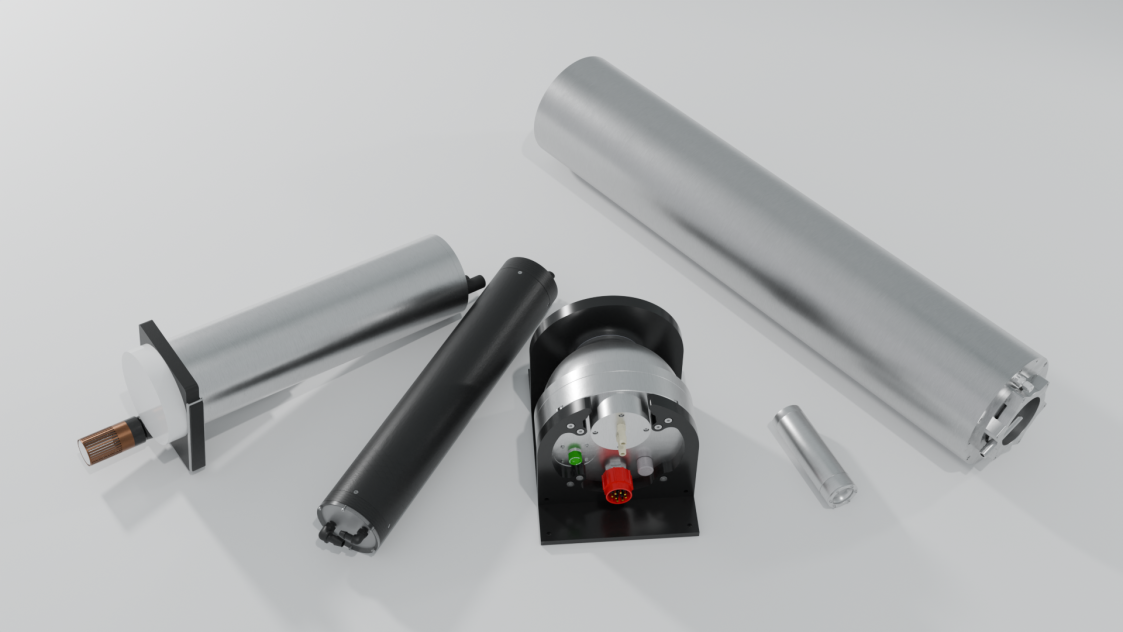
A variety of different in situ sensors for dissolved methane.