Real-World Laboratory Nienhagen
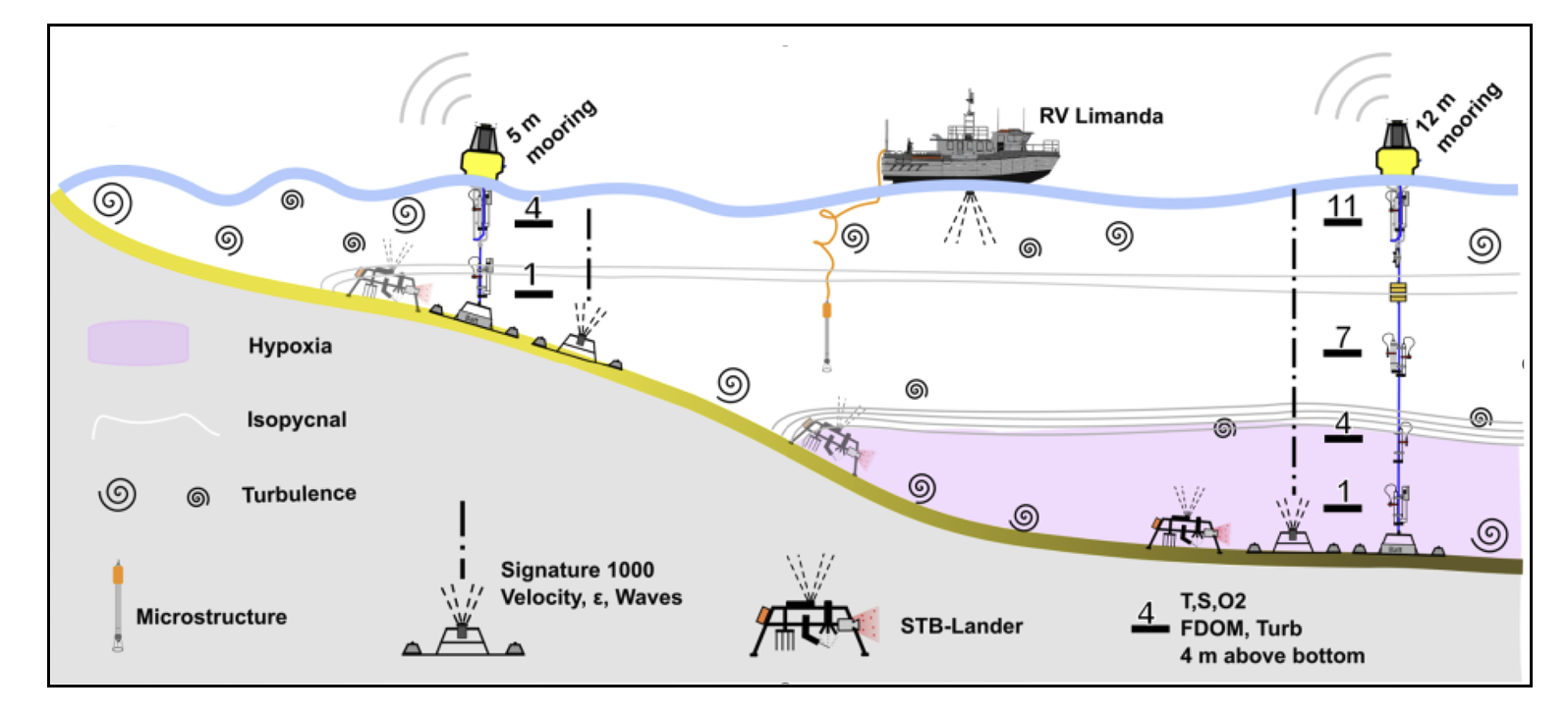
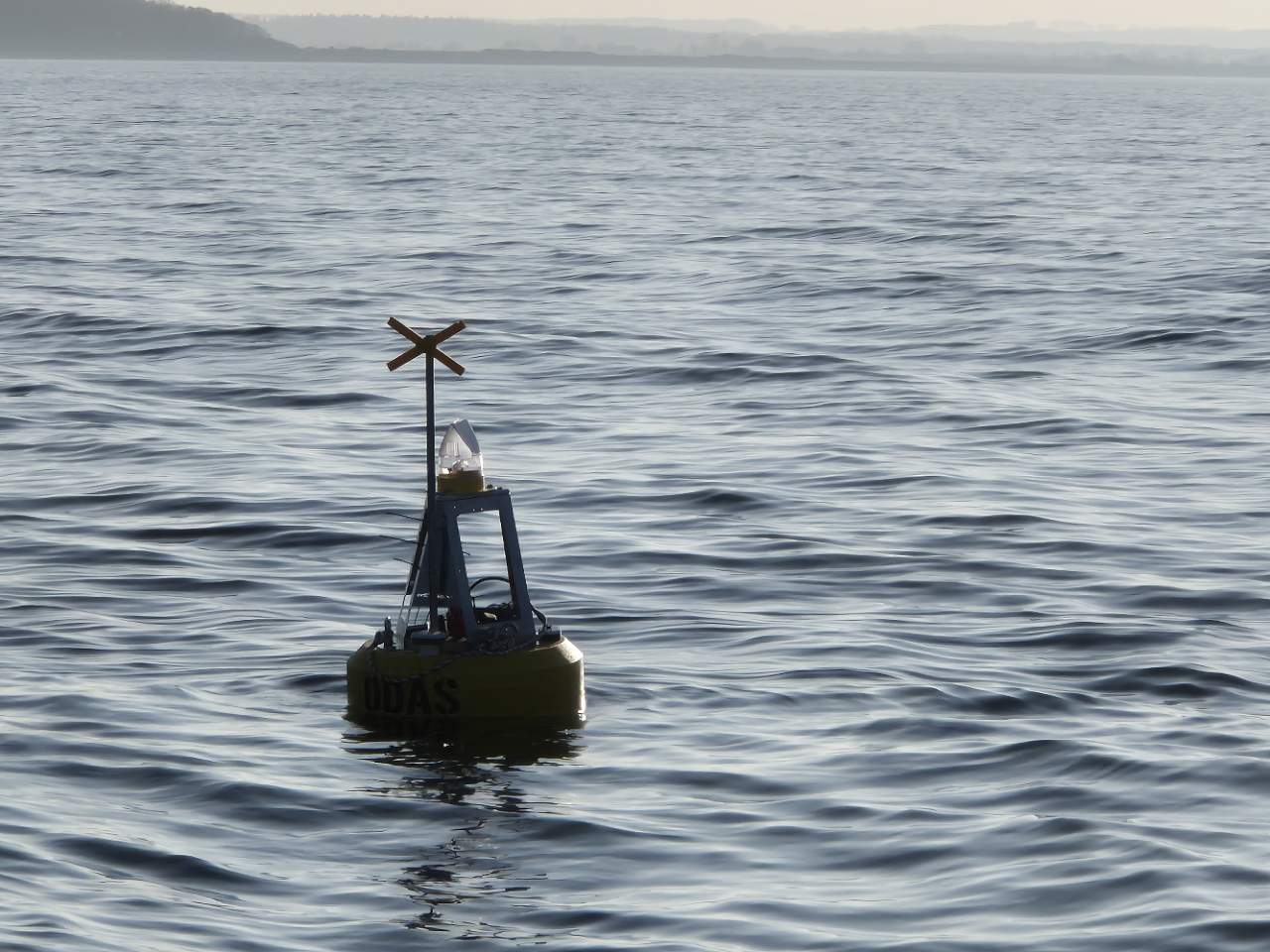
We have selected Nienhagen as a representative study site for our projects. As a so-called real-world laboratory, it enables the continuous acquisition of high-resolution biogeochemical and physical data through our mooring infrastructure. To this end, we operate moorings at water depths of 12 m and 5 m, equipped with a range of sensors, including CTD systems that measure conductivity, temperature, as well as oxygen, chlorophyll, and dissolved carbon.
This infrastructure is particularly suited to capturing short-lived and dynamic events, such as hypoxic episodes, temperature extremes, or turbulence-driven exchange processes, at high temporal resolution, and to analyzing them within their natural environmental context.
|
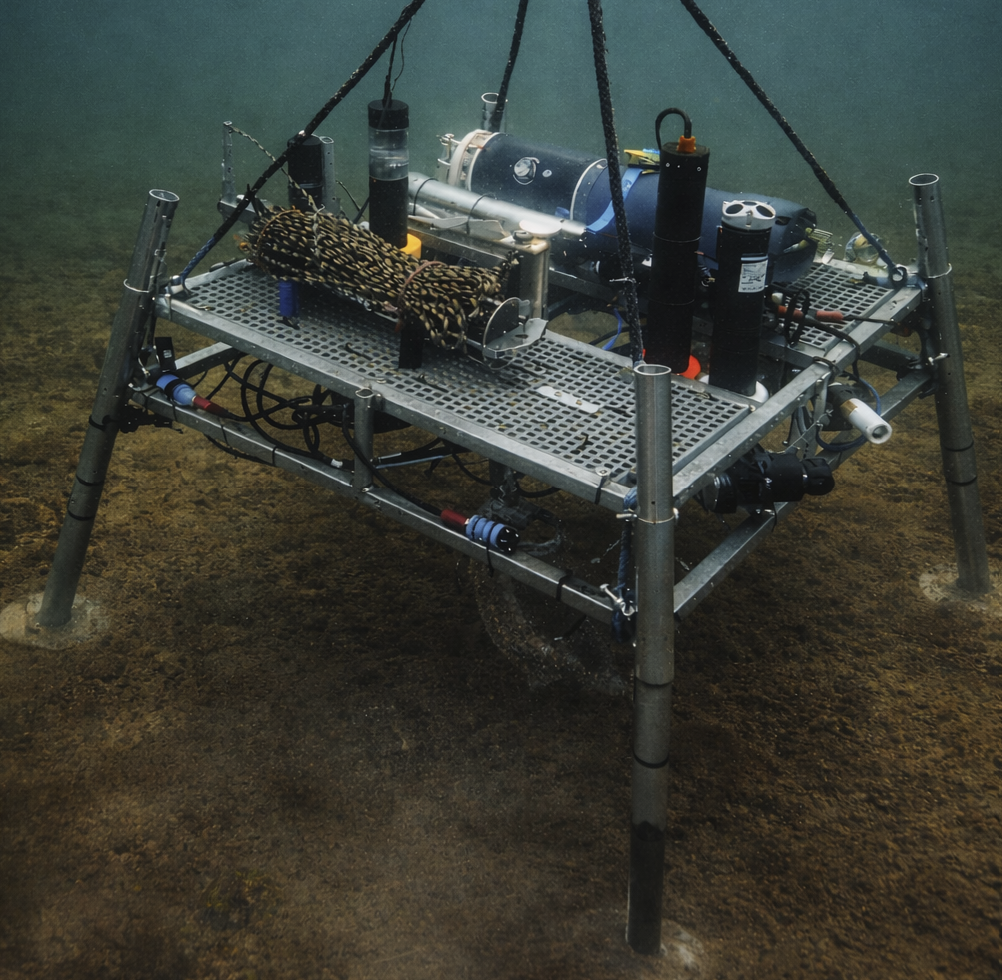
Real-World Laboratory Nienhagen: The moorings are permanently installed and enable the continuous monitoring of physical and biogeochemical parameters. In addition, landers are deployed in a targeted, event-based manner, for example during hypoxic waves, to capture short-lived, dynamic processes at high temporal resolution. |
 |
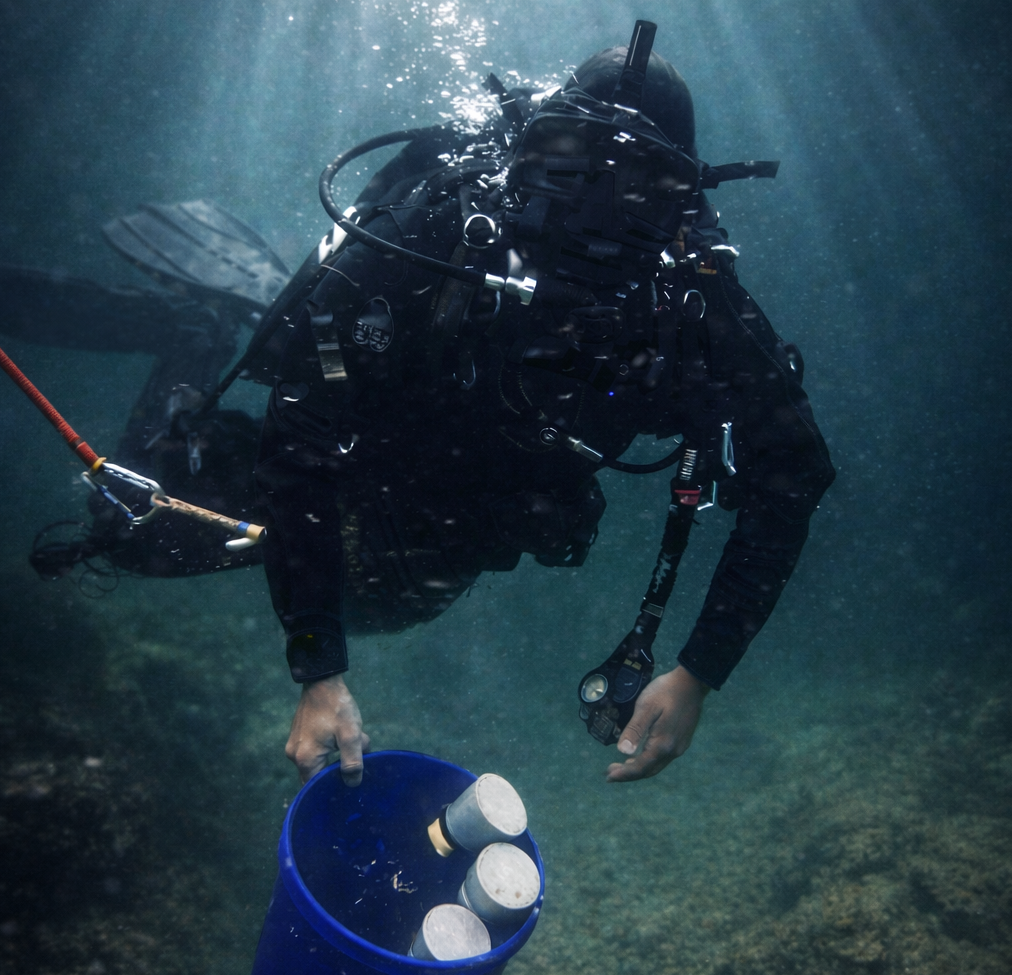
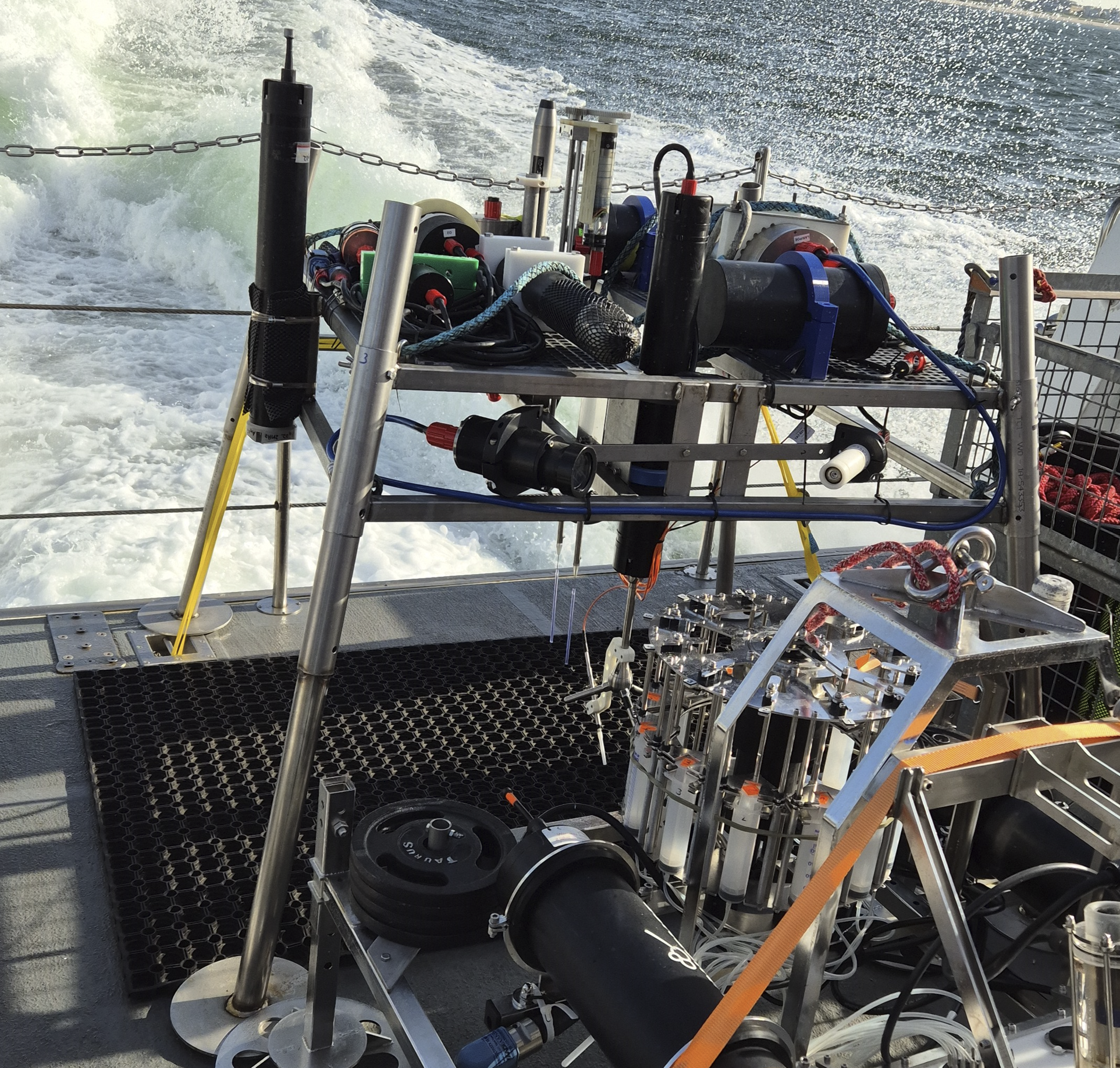
In addition, regular deployments are carried out using research vessels and by divers, during which targeted sampling, manipulation experiments, and methodological developments are conducted. This is complemented by the use of benthic lander systems and mobile measurement platforms, which allow processes to be quantified directly at the seafloor as well as in the water column, particularly with regard to benthic–pelagic coupling and particle-associated dynamics.
The combination of continuous monitoring, event-driven sampling, and experimental approaches makes the Nienhagen real-world laboratory a unique infrastructure in which physical, biogeochemical, and ecological processes can be studied in an integrative manner. This enables us not only to resolve mechanistic relationships, but also to quantify their relevance for natural coastal systems under realistic and rapidly changing environmental conditions.
Furthermore, Nienhagen serves as a platform for the development and validation of new measurement techniques and observational approaches, allowing insights to be systematically transferred to other coastal regions. In particular, the real-world laboratory enables the linkage of process understanding with scalable observation and modeling approaches, thereby providing a key foundation for predicting system responses under future climate conditions.
Although the moorings have only been deployed for one year, they have already yielded new insights into fish mortality events as well as hypoxic waves. The moorings and landers are maintained through our engineers Sebastian Neubert and Bennett Krebs. Scuba diving operations are supported through scientific divers under the lead of Erik Stohr.
Impressions from our Real-World Laboratory Nienhagen
 |
|
|
|
|